CCTV Monitoring vs Security Guard: Which Is Better for Improved Safety and Cost Saving?
A night security guard works 11 PM to 6 AM for Rs 15,000 to 25,000 per month and watches one gate. Remote CCTV monitoring covers your entire premises during the same hours at a fraction of the cost, without the risks of fatigue, blind spots, or missed incidents. If you are a business owner deciding between these two options, here is an honest, practical comparison to help you make the right choice.
Studies show that most commercial break-ins occur between midnight and 4 AM, when human alertness is at its lowest. This is the exact window where your night security needs to be at its strongest. Whether you choose a guard, remote monitoring, or a combination of both depends on your premises, budget, and risk level.
Night Security Guard: The Traditional Approach
Hiring a night guard is the default choice for most Indian businesses. A guard provides a visible physical presence, which serves as a psychological deterrent. Guards can physically intervene during an incident, handle non-security tasks like accepting late deliveries or managing night visitors, and operate without any dependency on internet or technology.
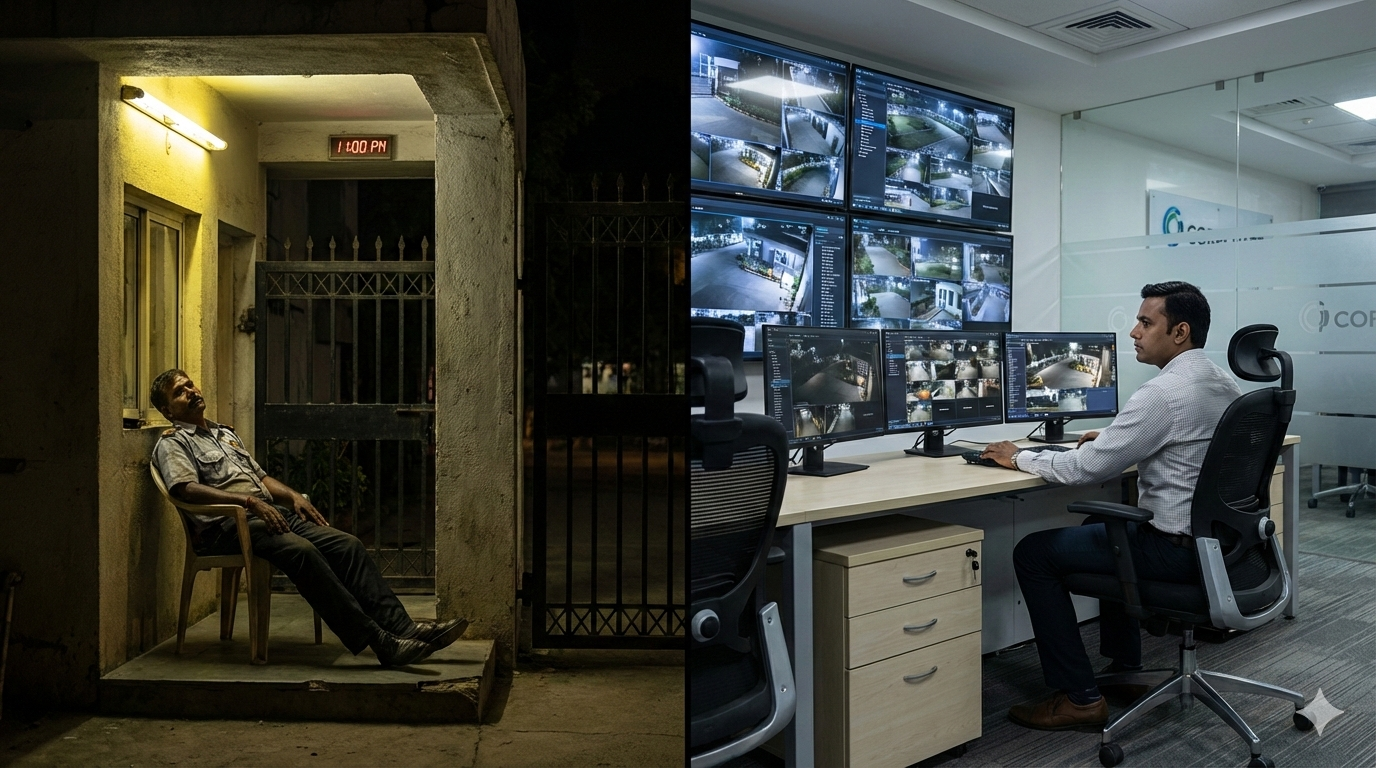
However, the limitations are significant. A single guard costs Rs 15,000 to 25,000 per month and can only be at one spot at a time. Research shows that night-shift workers experience peak fatigue between 1 AM and 4 AM, significantly reducing vigilance. Fatigue and reduced alertness during late-night hours is a well-known challenge in the security industry. A guard watching one gate cannot simultaneously monitor the parking area, back entrance, loading dock, or perimeter wall.
There is also no video evidence when incidents occur. If something happens in an area the guard was not watching, you have no footage to review, no proof for insurance claims, and no evidence for police complaints. Absenteeism, no-shows, and the risk of being influenced or compromised in insider theft cases add further uncertainty.
Hidden Costs Businesses Overlook
The monthly salary is just the starting point. Factor in overtime and holiday pay during Diwali and weekends, the cost of a replacement guard during sick leave, training and ongoing supervision, liability and insurance risks, uniform requirements, and PF/ESI compliance costs. The real cost of a night guard is often 30 to 40 percent higher than the base salary.
When a Night Guard is Still the Right Choice
- Sites requiring physical patrols such as large campuses or multi-building facilities
- Locations with frequent night visitors or late deliveries that need manual handling
- Manual tasks required like locking gates, checking IDs, or controlling access
- Areas with no internet connectivity where remote monitoring is not feasible
- High-risk sites where physical intervention capability is essential
Remote CCTV Monitoring: The Modern Alternative
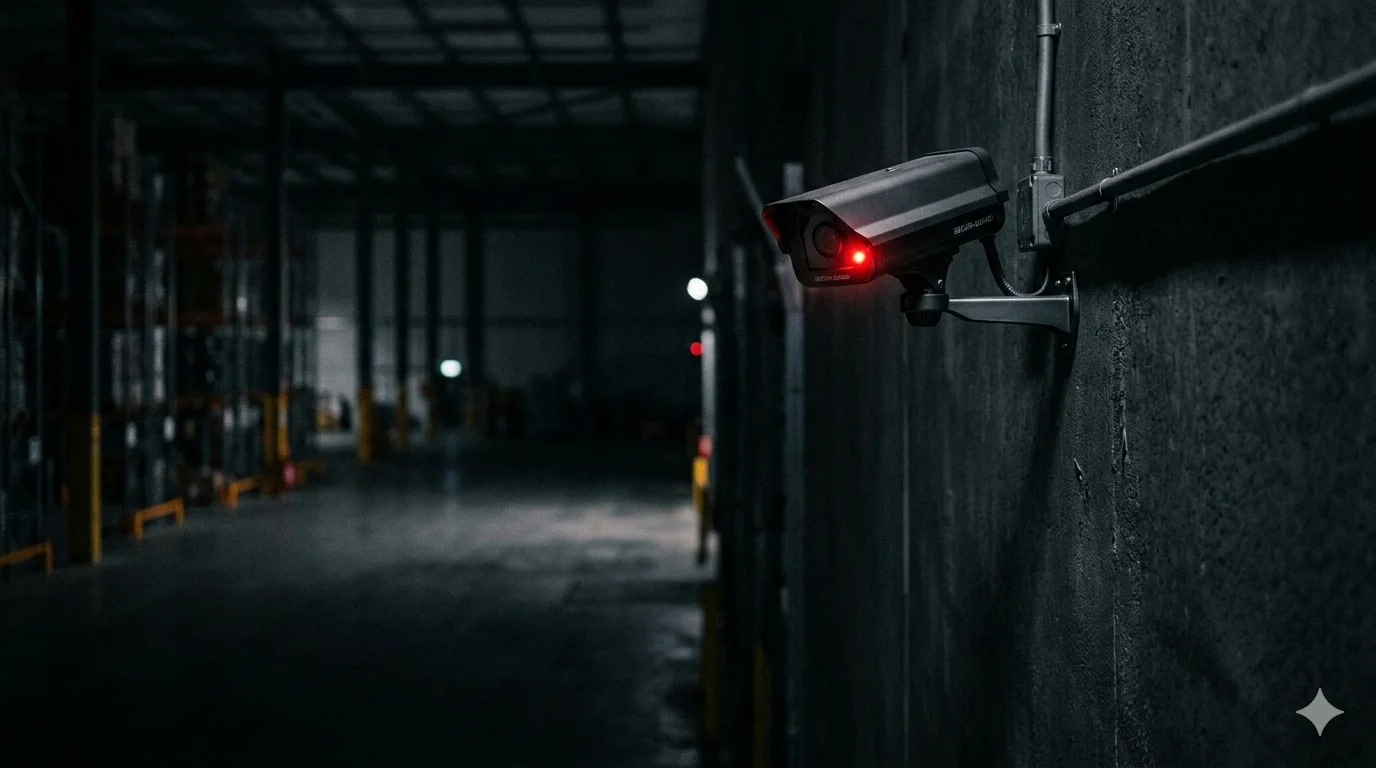
Professional remote CCTV monitoring covers your entire premises for the night hours you choose, up to the same 11 PM to 6 AM window, at a significantly lower cost than a single guard. Trained operators watch your camera feeds from a dedicated monitoring center, backed by motion detection technology that never gets tired.
Trained operators verify every alert on live camera feeds, ensuring genuine threats are acted upon immediately. The system maintains consistent alertness throughout the night. The level of vigilance at 2 AM is identical to 11 PM, something no human guard can match.
Multiple cameras are watched simultaneously, covering every entry point, parking area, perimeter wall, and blind spot. Two-way audio allows operators to issue live voice warnings, which serves as a powerful active deterrent. Every incident is recorded with full video evidence that is admissible in court and invaluable for insurance claims.
The system instantly alerts the business owner and designated emergency contacts. Remote video monitoring cannot be influenced, threatened, or compromised, and scales easily to multiple locations with minimal additional cost.
The limitations are straightforward. There is no physical body on-site to physically intervene. The system depends on internet and power, though backup solutions like UPS and 4G failover exist. It cannot handle non-security tasks, and requires an initial CCTV camera setup investment if you do not already have cameras installed.
What Happens During a Night Intrusion
Step 1: Motion detected by camera
Step 2: Alert sent to monitoring center
Step 3: Trained operator verifies threat on live camera feed
Step 4: Live voice warning issued through two-way audio
Step 5: Owner and designated emergency contacts alerted
Step 6: Full incident documented with video evidence
Typical response time: under 60 seconds
Head-to-Head Comparison
| Factor | Night Guard (11 PM – 6 AM) | Remote Monitoring (up to 11 PM – 6 AM) |
|---|---|---|
| Monthly cost | Rs 15,000 – 25,000 | Significantly lower |
| Real cost (incl. hidden) | Rs 20,000 – 35,000 | Significantly lower |
| Coverage area | 1 gate or entrance | Entire premises |
| 2 AM alertness | Reduced due to fatigue | 100% alert |
| Video evidence | None | Full recording |
| Can be compromised | Possible | No |
| Physical response | Yes, on-site | Alerts owner and emergency contacts |
| Multiple locations | Rs 15K+ per location | Minimal extra cost |
| Incident detection | Misses incidents in unmonitored areas | Covers all areas simultaneously |
| Scalability | Linear cost increase | Highly scalable |
| Reliability | Absenteeism common | 365 days, no exceptions |
Real-World Night Scenarios
Warehouse or Godown
Best approach: Guard + remote monitoring. Warehouses have multiple entry points, loading docks, and a large perimeter. One guard cannot cover all of these simultaneously. Adding remote video monitoring gives the guard full camera coverage of every angle, so incidents in unmonitored areas are no longer missed. Many warehouses reduce from two or three guards to one guard plus monitoring.
Retail Store After Hours
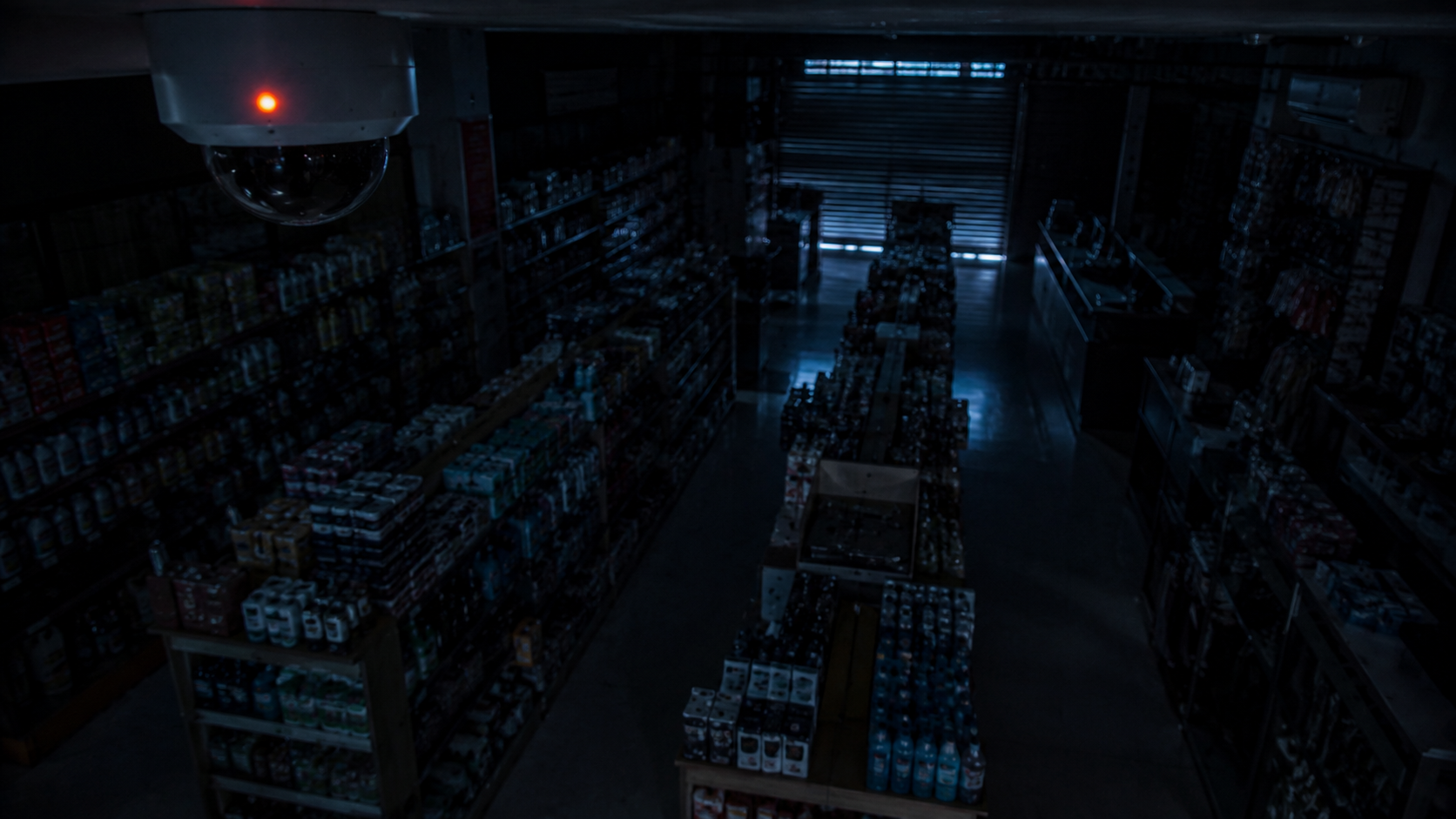
Best approach: Remote monitoring. The store is locked with no customers to manage. This is a pure surveillance need where monitoring alone provides complete coverage. If you currently have a guard for an empty locked store, monitoring can replace that cost entirely while covering the full premises.
Housing Society
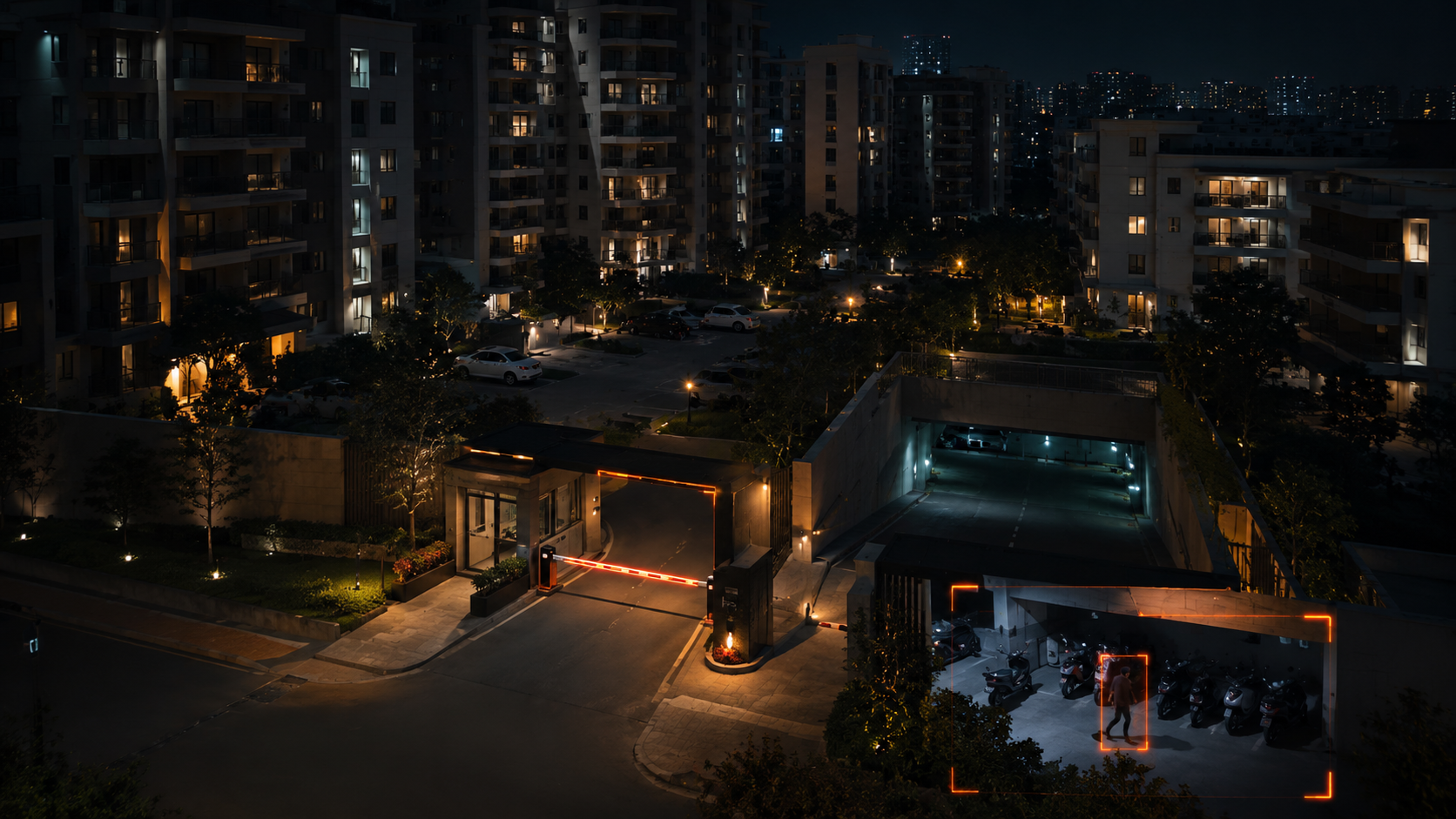
Best approach: Guard + remote monitoring. Societies need a guard at the main gate for visitor management and access control, but also need coverage across parking areas, corridors, and elevators. Adding remote monitoring means one gate guard gets backup eyes across the entire society, and the society can reduce the total guard count significantly.
Construction Site
Best approach: Guard + remote monitoring. Construction sites need a guard for material protection and physical presence. Adding remote monitoring for perimeter coverage and full video evidence creates a comprehensive security solution that neither option achieves alone.
Small Office
Best approach: Remote monitoring. The office is locked at night with no one inside. This is a straightforward surveillance requirement where monitoring alone provides complete coverage at a fraction of the cost of a dedicated guard.
Real Example: A warehouse in Surat reduced from three night guards to one guard plus remote monitoring. Night theft attempts dropped significantly thanks to full camera coverage with live voice warnings, and the overall security cost came down considerably while coverage improved.
Why Monitoring as an Add-On Is the Smartest Move
The real power of remote monitoring is not replacing guards. It is making your existing security setup significantly better. Add remote monitoring to your current guard setup, and the guard becomes far more effective because the monitoring center acts as their eyes across the entire premises.
Many businesses that currently employ two or three guards at Rs 45,000 to 75,000 per month find they can reduce to one guard plus monitoring and get better coverage at lower cost. The guard handles physical patrol and on-ground response, while the monitoring center watches all cameras and directs the guard to specific areas when something suspicious is spotted.
Across India, from small retail shops to large warehouses, businesses are adding monitoring to their security setup. The result is improved safety, better coverage, and meaningful cost savings.
How to Decide for Your Business
- Want to improve night security without doubling guard costs? Add remote monitoring to your existing setup
- Currently paying for multiple guards? Reduce to one guard plus monitoring for better coverage at lower cost
- Multiple locations to secure? Monitoring scales easily across all sites without adding guards at each
- Already have cameras installed? Adding monitoring is a straightforward upgrade
- Need physical tasks done at night? Keep your guard and add monitoring as backup eyes
- No internet at site? Guards remain necessary until connectivity is available
Trusted by Businesses for Night Security Monitoring
Modernext provides professional night monitoring for businesses across India, including:
- Warehouses and godowns
- Retail chains and showrooms
- Corporate offices
- Housing societies and gated communities
- Construction sites and industrial premises
The Bottom Line
Security guards and remote monitoring are not competing options. They complement each other. Adding professional monitoring to your existing guard setup improves coverage, ensures consistent alertness throughout the night, provides full video evidence, and often allows you to reduce guard count while getting better security.
The real question is not guard versus monitoring. It is whether your current security setup has the coverage and alertness you need during the critical 11 PM to 6 AM hours when most break-ins happen.
Want to know how remote monitoring compares for YOUR premises?
Talk to us. We will give you an honest assessment.
Frequently Asked Questions
Can CCTV monitoring replace a night security guard?
Remote monitoring works best as an add-on to your existing security setup. It covers more area, stays alert all night, and significantly improves safety. Many businesses reduce their guard count after adding monitoring because one guard backed by full camera coverage is far more effective than multiple guards without it.
How much does night CCTV monitoring cost compared to a guard?
Professional night CCTV monitoring costs significantly less than a night security guard. While a guard costs Rs 15,000 to 25,000 per month for a single spot, remote monitoring covers your entire premises at a fraction of that cost. Contact Modernext for a custom quote based on your premises.
What happens when remote monitoring detects an intruder at night?
The system detects motion, a trained human operator verifies the threat on live camera feed, issues a live voice warning through two-way audio, and simultaneously alerts the business owner and designated emergency contacts. Typical response time is under 60 seconds.
Is one night guard enough for a large premises?
Rarely. A single guard can physically be at one location at a time. For premises with multiple entry points, parking areas, and blind spots, you would need two or three guards costing Rs 45,000 to 75,000 per month. Remote monitoring covers all these areas simultaneously at a fraction of the cost.
Related reading: How Much Does CCTV Monitoring Cost in India? | AI CCTV vs Human Monitoring | STQC Certification Deadline 2026