Edge Computing vs Cloud Surveillance: The 2026 Hybrid Model Explained
If you have shopped for CCTV or monitoring recently, you have run into two buzzwords pulling in opposite directions: “edge AI cameras” that process everything on-site, and “cloud surveillance” that sends everything to a data centre. Vendors on each side will tell you theirs is the future. For a business owner, the debate is mostly noise — what you actually care about is whether an intruder gets stopped at 2 AM, whether your footage survives an internet outage, and whether the bill is sane. This guide explains what edge and cloud really mean in surveillance, where each one falls short on its own, and why the serious answer in 2026 is a hybrid of the two.
What “Edge Computing” Means in Surveillance
Edge computing simply means the processing happens close to where the footage is captured — on a device at your premises, near your cameras and recorder — rather than being shipped somewhere else first. When analysis runs “on the edge,” a scene is examined on-site, in the moment, without waiting on an internet round-trip.
For surveillance, that has real advantages. It is fast, because nothing has to travel to a distant server and back before something is flagged. It is light on bandwidth, because you are not streaming every camera to the internet around the clock. And it keeps working even when your connection does not — the local device does not go blind the moment the internet drops.
What “Cloud Surveillance” Means
Cloud surveillance is the opposite emphasis: footage and events are sent to remote servers, where they can be stored, reviewed, analysed more deeply, and accessed from anywhere. The appeal is scale and reach. You are not limited by the storage in a box on your wall, you can pull up your premises from another city, and heavier analysis can run on far more powerful machines than you would ever install on-site.
The catch is that the cloud depends entirely on your internet connection, and streaming everything to it continuously is expensive and bandwidth-hungry — a genuine problem in many Indian locations where upload speeds are limited or connections are patchy. If the link goes down, a purely cloud-dependent setup can lose eyes on your premises at exactly the wrong moment.
Why Neither One Wins on Its Own
Put plainly, each approach solves the other’s weakness — and creates its own.
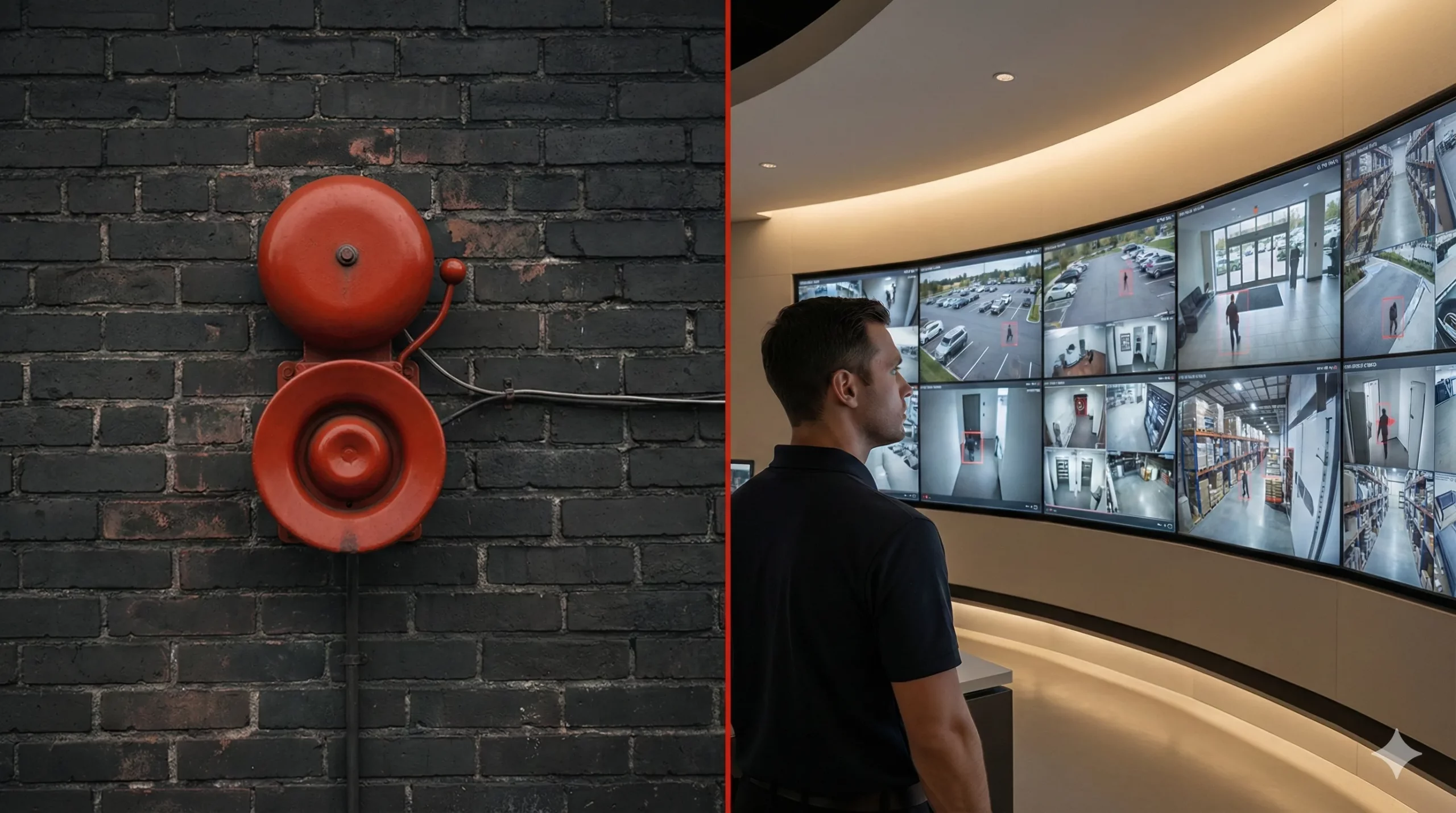
- Edge alone is fast and resilient, but a device sitting on your wall cannot, by itself, give you trained people watching, remote access, long-term storage, or expertise. It can flag something. It cannot decide and respond.
- Cloud alone gives reach, storage, and remote oversight, but leans on constant internet, runs up bandwidth costs, and goes dark if the connection fails.
- Both, working together — the edge handles the instant, always-on first pass on-site; the cloud and the people behind it handle verification, response, storage, and access. Each covers the other’s blind spot.
This is why the “edge versus cloud” framing is misleading. For a business that actually wants to be protected, it was never an either-or.
The 2026 Standard: A Hybrid Model
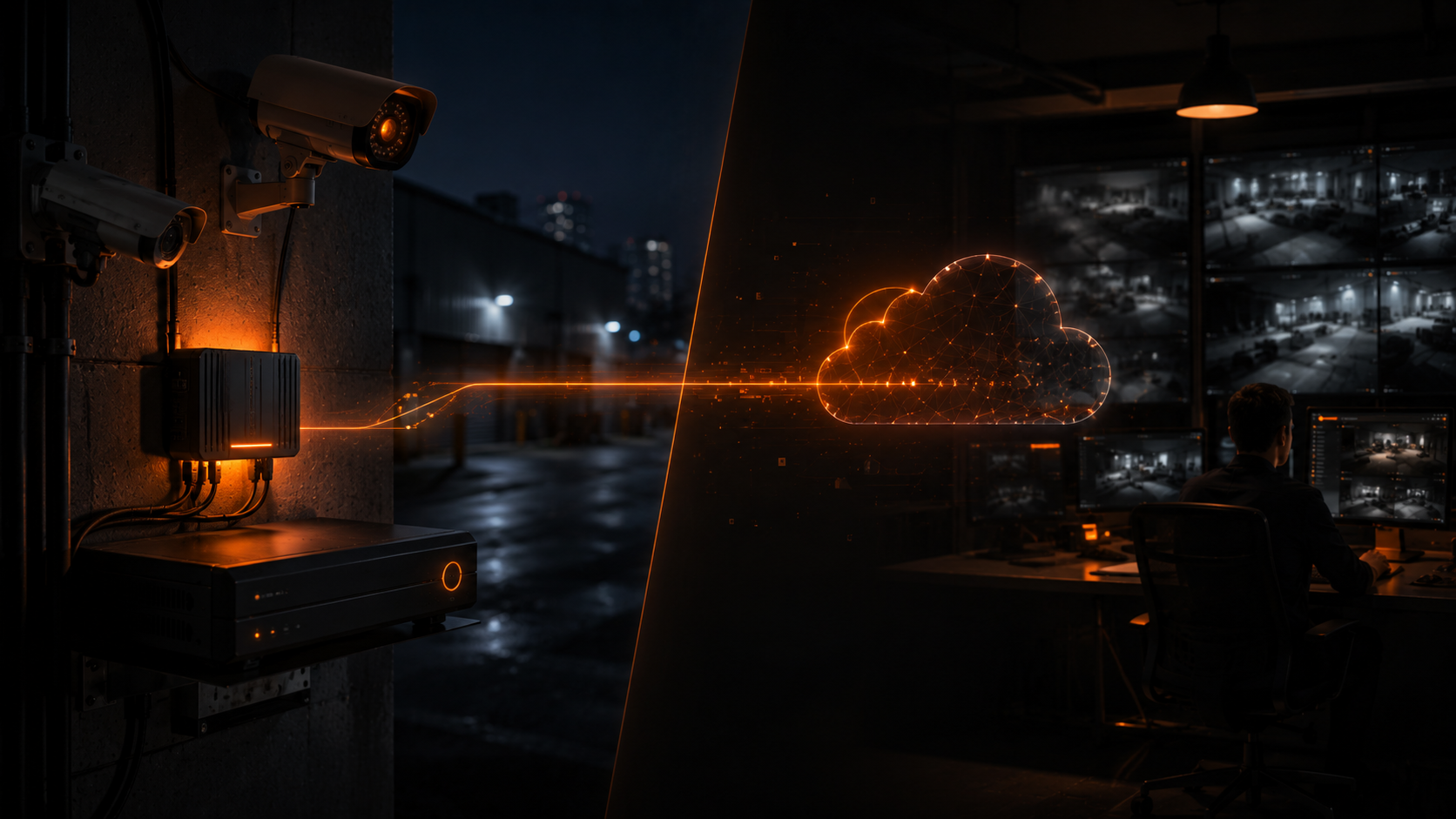
The approach the industry has settled on in 2026 is hybrid: do the tireless, real-time work locally at the edge, and use the cloud and remote operators for everything that benefits from reach, judgement, and scale. The edge decides, in the moment, what is worth a closer look. Only that gets escalated — so you are not paying to stream hours of empty footage, and you are not blind when the internet hiccups. Meanwhile, trained people and cloud services provide the verification, the response, the record, and the remote access that a lone on-site box never could.
The result is the best of both: the speed and resilience of edge, with the reach and human judgement of the cloud.
What This Actually Means for Your Business
Strip away the jargon and the hybrid model is really about four practical things that matter to any Indian business owner:
- It keeps watching during outages. When the internet or power flickers — as it does — the on-site layer does not simply switch off.
- It keeps bandwidth and cost sensible. You are not paying to push every camera to the cloud every second; only what matters goes up.
- It still gives you people and a record. Detection on-site is paired with trained operators who verify and respond, and a clear account of what happened.
- It respects your existing setup. The right hybrid approach adds to what you own rather than replacing it.
How the Hybrid Model Looks in Practice
You do not need to buy an entirely new “edge-cloud system” to get this. For most businesses, the hybrid model is exactly what a good professional monitoring service already delivers on the cameras they already own.
Modernext works with your existing cameras and DVR or NVR. A single small device is added near your recorder — using the network connection and power already there, with no rewiring. That device handles the fast, always-on first pass on-site, so nothing depends on streaming every feed to the internet and nothing goes blind if the connection drops. Trained operators then provide the verification, response, and record remotely, with incidents reported to you through the Modernext app. That is the hybrid model in real life: edge speed on your premises, human judgement behind it — without replacing a single camera.
A real night, end to end:
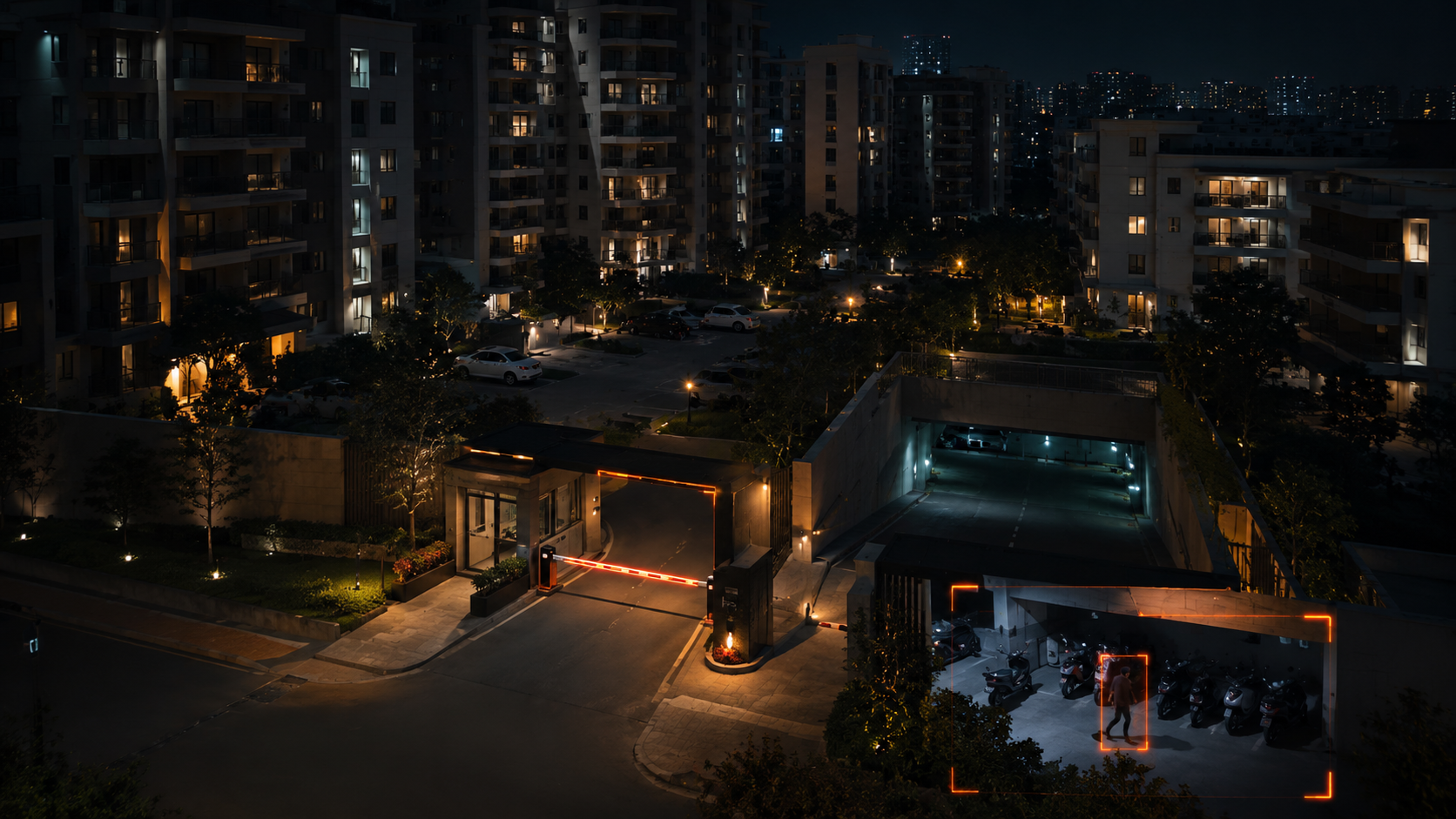
It is 2:35 AM and the area’s internet has been unstable all night. A figure approaches the rear shutter of a warehouse. Because the first pass runs on-site, the moment is caught instantly rather than lost to a dropped cloud connection, and it is surfaced for attention within seconds. An operator verifies it is not staff, a response goes out immediately, and the incident is documented in the Modernext app for the owner to see by morning. A purely cloud-dependent setup might have been offline at that exact moment. A purely edge device might have flagged it and done nothing. The hybrid did both jobs.
What to Ask a Provider
You do not need to become a network engineer. You just need to know that a provider has thought about both halves. A few straightforward questions get you there:
- Does monitoring keep working if my internet goes down? The honest answer should involve on-site processing, not “it reconnects when the line is back.”
- Are you streaming all my cameras to the cloud constantly, or only sending what matters? This affects both bandwidth and your bill.
- Who verifies and responds to a detected event, and where is that footage stored? You want people and a record, not just a device.
- Can this run on my existing cameras and recorder? A real hybrid setup should not require you to rip everything out.
Frequently Asked Questions
Is edge computing or cloud surveillance better for my business?
Neither is better on its own. Edge is fast and keeps working during outages but cannot provide people, storage, or remote access by itself. Cloud provides reach and oversight but depends on constant internet and can be bandwidth-heavy. A hybrid model uses each for what it does best, which is why it has become the 2026 standard.
Does the hybrid model mean I have to buy new cameras?
No. Modernext delivers the hybrid approach on your existing cameras and DVR or NVR. A small device is added near your recorder using the power and network already there — no rewiring and no replacement of working equipment.
Will my monitoring stop working if the internet goes down?
With a hybrid setup, the on-site layer keeps doing the real-time first pass even when the connection is unstable, so your premises is not left blind during an outage. That resilience is one of the main reasons the hybrid model exists.
Isn’t sending everything to the cloud expensive?
Streaming every camera to the cloud continuously is both bandwidth-heavy and costly, and impractical on many Indian connections. A hybrid model avoids this by processing on-site first and only escalating what matters, keeping both bandwidth and cost sensible.
Get the hybrid model on the cameras you already own.
Modernext pairs fast on-site detection with trained operators who verify and respond — no new cameras, no going blind during an outage. See how it would work for your premises.