STQC Certification Deadline April 2026: Is Your CCTV System Compliant?
Starting April 1, 2026, non-compliant CCTV cameras can no longer be manufactured, imported, or sold in India. If you are a business owner with an existing CCTV system, this regulation directly impacts you. Here is everything you need to know about the STQC certification mandate, what it means for your current cameras, and what steps you should take right now.
What is STQC Certification and ER-01 Compliance?
STQC stands for Standardisation Testing and Quality Certification, a directorate under the Ministry of Electronics and Information Technology (MeitY). In March 2024, the Government of India issued a gazette notification introducing Essential Requirements (ER) for CCTV cameras under the Compulsory Registration Order.
These requirements ensure that every network-connected CCTV camera sold in India meets strict cybersecurity standards, including:
- Secure boot and firmware signing to prevent tampering
- Encrypted communication via TLS/HTTPS protocols
- Strong, unique password enforcement eliminating default passwords
- Disabled debugging and test ports in shipped devices
- Tamper-resistant hardware with physical security features
- Supply chain transparency with declared origin of chipsets, PCBs, and processors
In simple terms, the government wants every IP camera in India to be cyber-secure by design, not just a recording device that can be easily hacked.
The April 1, 2026 Deadline: What Exactly Changes?
The MeitY Office Memorandum dated January 16, 2026 has made it clear: the grace period is over. Here is what happens on April 1, 2026:
No More Sales of Non-Compliant Cameras
Any CCTV camera that does not conform to the Essential Requirements notified in the Gazette notification dated April 9, 2024 cannot be legally sold, manufactured, or imported in India.
BIS Certificates Become Non-Functional
Existing BIS certificates for non-compliant camera models will cease to be valid. Manufacturers cannot use old certifications to continue selling.
No More Extensions
The government has explicitly stated that sufficient time has elapsed for the industry to transition. The relaxation previously granted will no longer be available beyond April 1, 2026.
Mass Clearance of Non-Compliant Stock
BIS has already issued mass cancellation notices to non-compliant licence holders, ordering them to stop supply and withdraw non-compliant goods from warehouses, markets, and distributors.
Which Brands Are STQC Certified?
As of February 2026, only a handful of manufacturers have received STQC certification. The certified brands with their approved camera models are:
| Brand | Company | Certified Models | Headquarters |
|---|---|---|---|
| Sparsh | Samriddhi Automation Pvt. Ltd. | 6+ | Haridwar, Uttarakhand |
| PRAMA | Prama India Private Ltd. | 24+ | Maharashtra |
| CP PLUS | Aditya Infotech Ltd. | 10+ | Noida, UP |
| Matrix | Matrix Comsec Pvt. Ltd. | 7+ | Gujarat |
| Vicon | Vicon Security Tech Pvt. Ltd. | 1+ | International |
| Honeywell | Honeywell International India Pvt. Ltd. | 2+ | Gurgaon |
| Equus | Equus Digital Solution Pvt. Ltd. | 1+ | Kolkata |
Notably absent from this list are major international brands like Hikvision, Dahua, Axis, Hanwha, Bosch, and Panasonic. These brands, which dominate the Indian CCTV market, have not yet received STQC certification. This is a significant concern for the millions of businesses running cameras from these manufacturers.
What Happens to Your Already Installed CCTV System?
This is the question every business owner is asking. Let us break it down clearly:
Your Existing Cameras Will Continue to Work
The STQC regulation targets the sale, manufacture, and import of new cameras. It does not mandate that you rip out your existing CCTV system on April 1. Your currently installed cameras will continue to function as they do today.
But Here is Where the Problems Start
1. No Replacement or Expansion Possible
If a camera in your existing system fails, you cannot buy the same non-compliant model as a replacement. You will be forced to source a compliant alternative, which may not be compatible with your current NVR or DVR setup.
2. Spare Parts and Support Will Dry Up
As non-compliant manufacturers are barred from the Indian market, their supply chains for spare parts, firmware updates, and technical support will gradually disappear. Your system will become increasingly difficult and expensive to maintain.
3. Cybersecurity Vulnerabilities Remain
The entire reason for this regulation is that non-compliant cameras have serious cybersecurity weaknesses including default passwords, unencrypted data transmission, and backdoor access. Your existing non-compliant cameras still carry these risks. They can be hacked, used as entry points into your network, or exploited for unauthorized surveillance.
4. Government and Corporate Projects Will Mandate Compliance
If your business works with government agencies, large corporations, or participates in tenders, compliance with STQC standards is already mandatory for government procurement since June 2024. This will increasingly trickle down to private sector requirements.
5. Insurance Implications
As compliance becomes the industry standard, insurance companies may begin factoring in whether your security system meets current regulations when processing claims. A non-compliant system could weaken your position during an insurance dispute.
Analog Cameras Are Exempt, For Now
If your business still runs analog HD cameras (not connected to the internet or a network), you are currently exempt from STQC certification requirements. However, analog systems are rapidly being phased out in favour of IP cameras, and long-term support for analog technology will continue to decline.
DVRs and NVRs: The Grey Area
Interestingly, DVRs (Digital Video Recorders) and NVRs (Network Video Recorders) currently remain unregulated under the STQC mandate. The regulation focuses on cameras. However, industry experts expect recording devices to come under similar compliance requirements in the near future, since they also handle sensitive video data and are connected to networks.
What Should Business Owners Do Right Now?
Whether you are planning a new CCTV installation or managing an existing system, here is your action plan:
Step 1: Audit Your Current System
Identify every camera in your setup. Note the brand, model, and whether it is an IP camera or analog. Check if your cameras are from a STQC-certified manufacturer.
Step 2: Check Your Camera Brand’s Certification Status
Visit the official STQC certified products page to verify if your camera brand and model have been certified.
Step 3: Plan Your Transition
If your system uses non-compliant cameras, start planning a phased migration to compliant models. You do not have to replace everything at once. Prioritise cameras in critical areas first.
Step 4: Secure Your Existing Cameras Now
While your non-compliant cameras are still in use, take immediate cybersecurity steps: change default passwords, update firmware if available, disable remote access on cameras that do not need it, and segment your CCTV network from your business network.
Step 5: Add Professional Monitoring
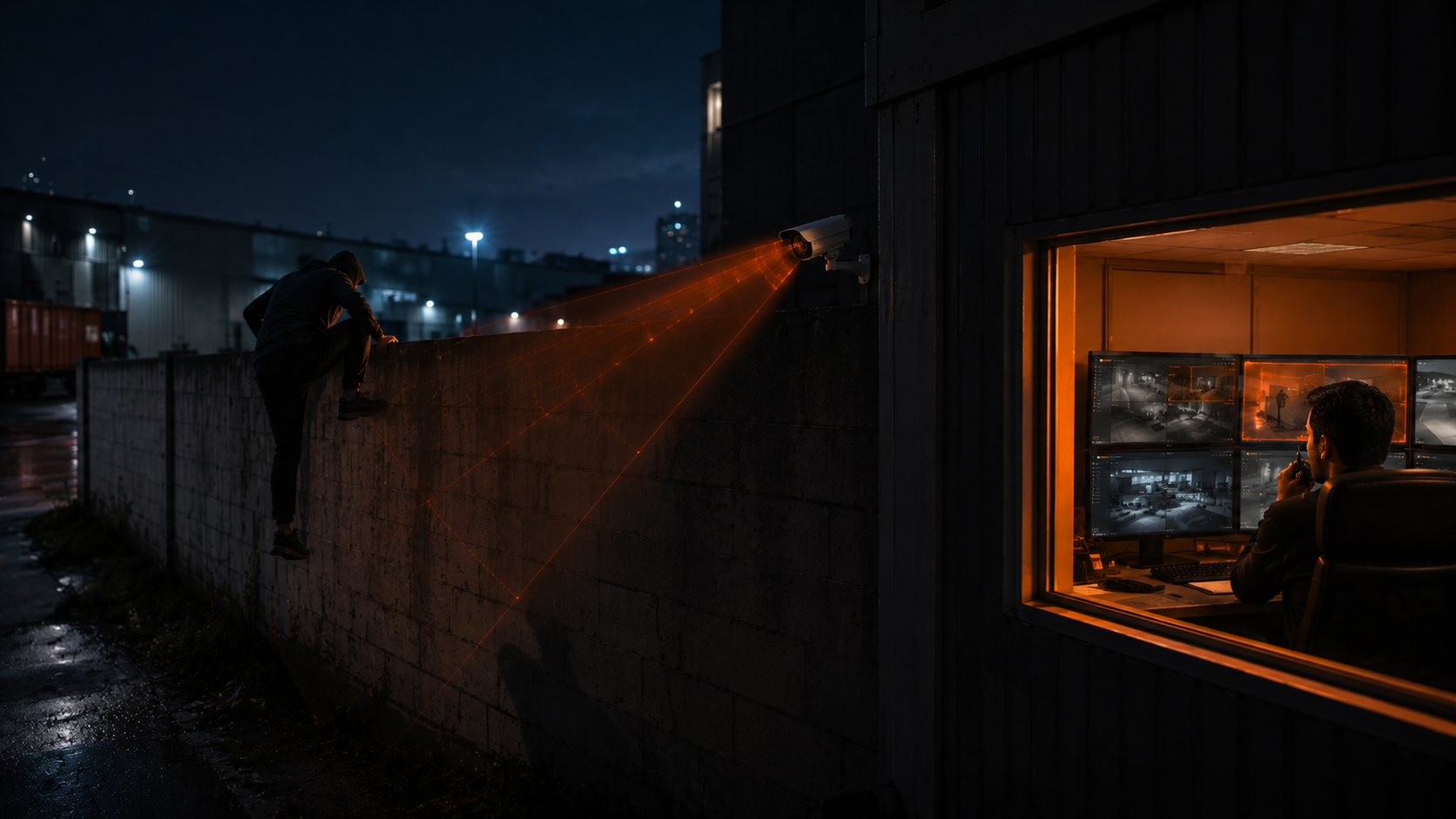
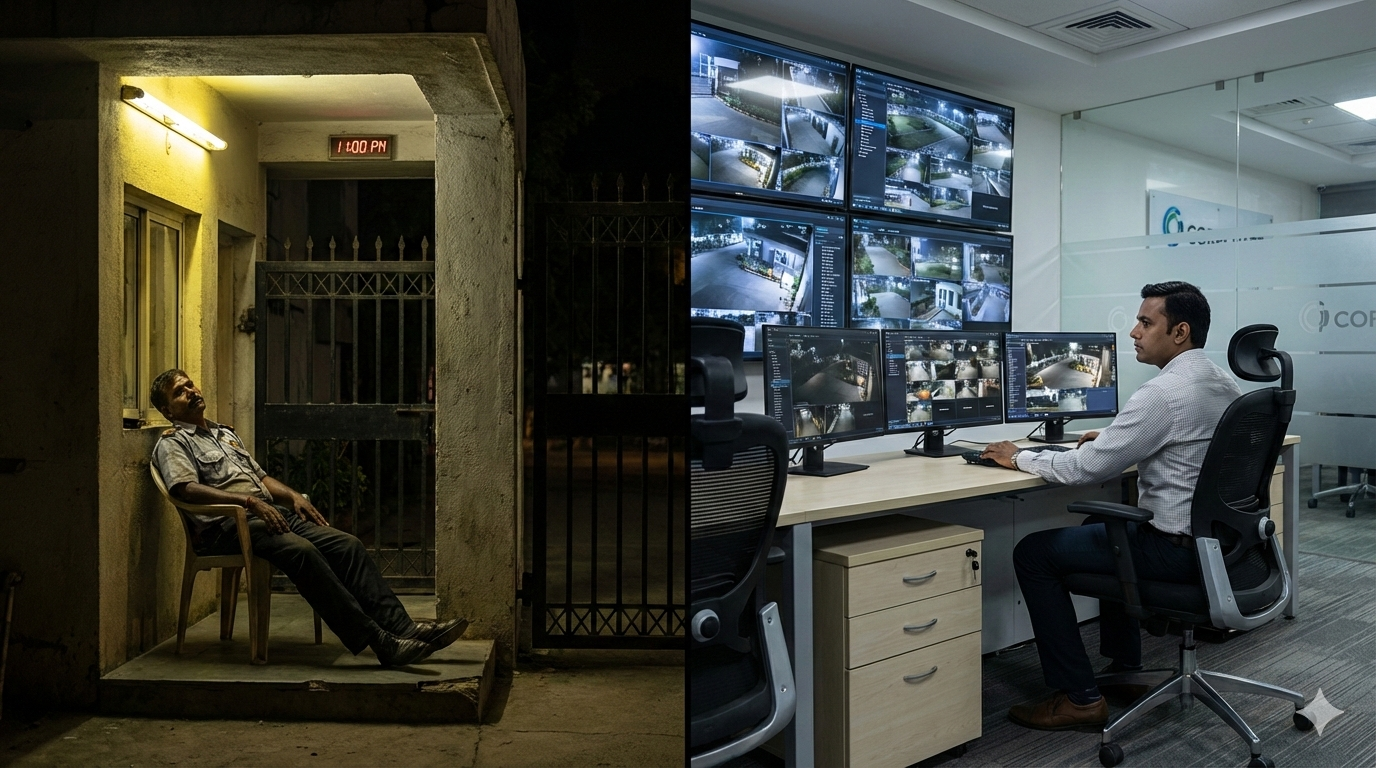
Whether your cameras are compliant or not, professional CCTV monitoring adds the critical layer that hardware alone cannot provide. Trained operators watching your feeds can detect and respond to threats in real-time, turning your cameras from passive recorders into active security tools.
How Professional Monitoring Works With Both Old and New Systems
Here is the good news: professional CCTV monitoring services like Modernext work with your existing cameras, regardless of their compliance status. Our monitoring center connects to your DVR/NVR system through a secure internet connection.
This means:
- No immediate hardware replacement needed to start professional monitoring
- Works with all major brands including Hikvision, Dahua, CP Plus, Honeywell, Bosch, and others
- Trained operators verify every alert, eliminating false alarm fatigue
- Real-time response with alarm activation, two-way voice warnings, and police coordination
- Covers your property 365 days a year during your most vulnerable hours
As you plan your transition to compliant cameras, professional monitoring ensures your existing system delivers maximum security value today.
The Bigger Picture: Why This Regulation Matters
India installs approximately 3 million CCTV cameras every month. Many of these cameras, particularly low-cost imports, have been found to have serious cybersecurity flaws. Some cameras have been discovered transmitting data to servers outside India, creating national security concerns.
The STQC mandate is part of India’s broader push towards:
- Cybersecurity resilience across IoT devices
- Data sovereignty ensuring Indian surveillance data stays in India
- Make in India manufacturing with transparent supply chains
- Smart Cities Mission deployment with secure, standardised equipment
While the short-term disruption is significant, especially for businesses relying on non-compliant systems, the long-term benefit is a more secure surveillance ecosystem for the entire country.
Key Takeaways
- The STQC compliance deadline is April 1, 2026 with no further extensions
- Only 7 brands are currently certified with a combined 50+ camera models
- Major brands like Hikvision and Dahua are not yet certified
- Your existing cameras will continue to work but will face replacement, support, and security challenges
- Analog cameras are currently exempt but are being phased out
- Start auditing your system now and plan a phased transition
- Professional monitoring works with both compliant and non-compliant cameras, maximising your current system’s value
Need Help Assessing Your CCTV System?
Not sure if your cameras are compliant? Worried about what this means for your business security? Contact Modernext for a free consultation. Our team can assess your current system, recommend a transition plan, and set up professional monitoring to protect your property starting tonight.
Call us at +91 8866 9898 66 or fill out our contact form for a free security assessment.
Not Sure If Your Cameras Are Compliant?
Send us your camera brand and model. We will check compliance and tell you your options, including how professional monitoring can maximise your current system.