Autonomous AI Agents in CCTV Monitoring: What 2026 Means for Your Business Security
Autonomous AI agents are the biggest talking point in video surveillance going into 2026. Vendors promise cameras that think for themselves, flag threats on their own, and run your security without anyone watching. For a business owner paying for guards and monitoring, that sounds like the end of human cost. The reality is more useful and more honest: AI CCTV monitoring in 2026 is powerful, but the businesses that stay genuinely protected are the ones that pair it with trained human judgement. Here is what autonomous AI agents actually do, where they quietly fail, and what the shift means for protecting your premises this year.
What “Autonomous AI Agents” Actually Mean in Surveillance
For years, AI in CCTV meant simple motion detection and basic object recognition. It could tell you something moved, or that the shape was roughly a person or a vehicle. Useful, but noisy. It triggered on cats, shadows, headlights, and rain just as often as on real threats.
The 2026 generation goes further. Instead of reacting to a single trigger, an autonomous AI agent looks at a scene the way a more aware observer might: it considers what is happening, where, at what time, and how it compares to what is normal for that location. A person walking through a warehouse at 11 AM is routine. The same person, same gait, lingering at a loading shutter at 2:30 AM is not. The agent can connect those dots and surface it as something worth attention rather than just “motion detected.”
That is genuine progress. It means fewer junk alerts and faster surfacing of the events that matter. But notice what the agent is doing: it is analysing and recommending. It is not deciding what your business should do about it, and it is not the one a court, an insurer, or an intruder will answer to.
Where Autonomous AI Genuinely Helps
Used well, AI agents change the economics of monitoring. A single trained operator used to be limited by how many feeds a human can realistically watch before attention collapses. With AI doing the first pass across every camera continuously, the operator is no longer hunting through thumbnails hoping to catch something. The system raises its hand on the handful of moments that look unusual, and the human attention goes exactly where it is needed.
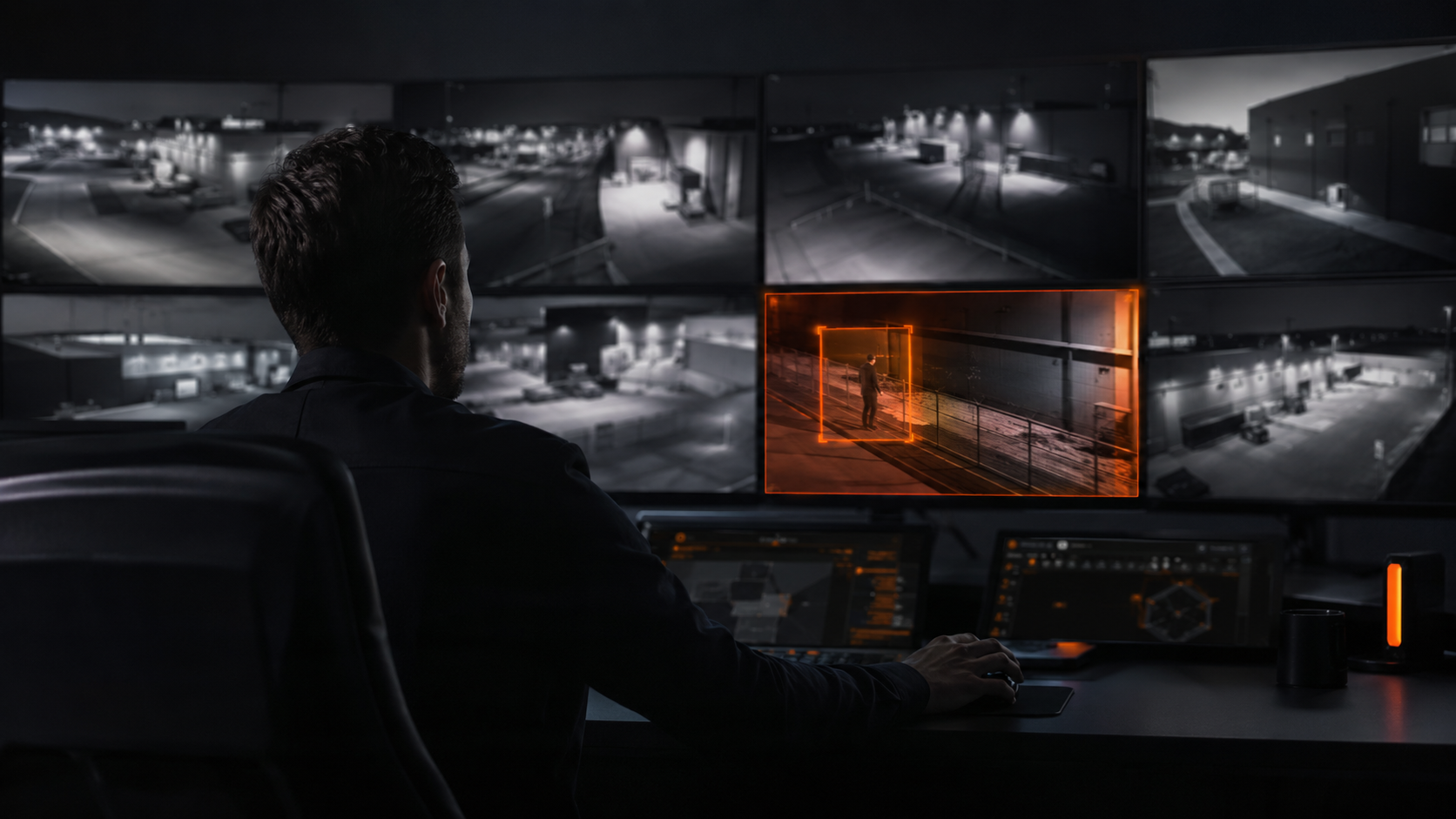
What this looks like in practice: Across a 32-camera site, nothing of concern happens for hours. Then, at 1:47 AM, the same area shows a figure approaching a perimeter wall and pausing. Instead of that moment being buried in hours of empty footage that nobody will ever review, it surfaces in seconds. The difference between catching it live and finding it on a recording the next morning is the difference between prevention and a police complaint.
This is why AI CCTV monitoring in 2026 is worth taking seriously. It does not get tired at 3 AM. It does not look away to open a gate. It watches every feed at once. For the detection half of the job, it is a real upgrade.
Where Autonomous AI Falls Short — And Why It Matters
The pitch for fully autonomous security quietly skips over the part of the job that actually keeps you protected: deciding what is real and doing something about it. Here is where AI alone leaves a gap.
It cannot reliably tell context from threat. An AI agent can flag a person at your gate at midnight. It cannot reliably know whether that is a thief, a drunk neighbour who wandered in, a delivery driver who arrived early, or your own staff member who forgot something. To a business, those are completely different situations needing completely different responses. Treat them all as alarms and you are back to alert fatigue — the exact problem AI was supposed to solve.
It does not carry accountability. When an AI raises a false alarm, nobody is answerable. When it stays silent through a real one, there is no one who made a judgement call you can stand behind to your insurer, your staff, or the police. Security is not just detection. It is someone making a defensible decision and owning it.
It cannot intervene. An alert on a screen does not stop anything. The moment that changes an outcome is a calm, immediate, human response to the situation — a live voice challenge to a person who thought no one was watching, the right call placed to the right people, in the right order. That is judgement under pressure, and that is still firmly human work.
The hard truth about “fully autonomous” security:
An AI agent that flags a threat but cannot verify it, decide on it, or respond to it has done a quarter of the job. The other three quarters — confirming it is real, judging how serious it is, and acting before it escalates — are exactly the parts that determine whether your business actually stays safe. Removing the human does not remove that work. It just leaves it undone.
Why 2026 Belongs to the Hybrid Model
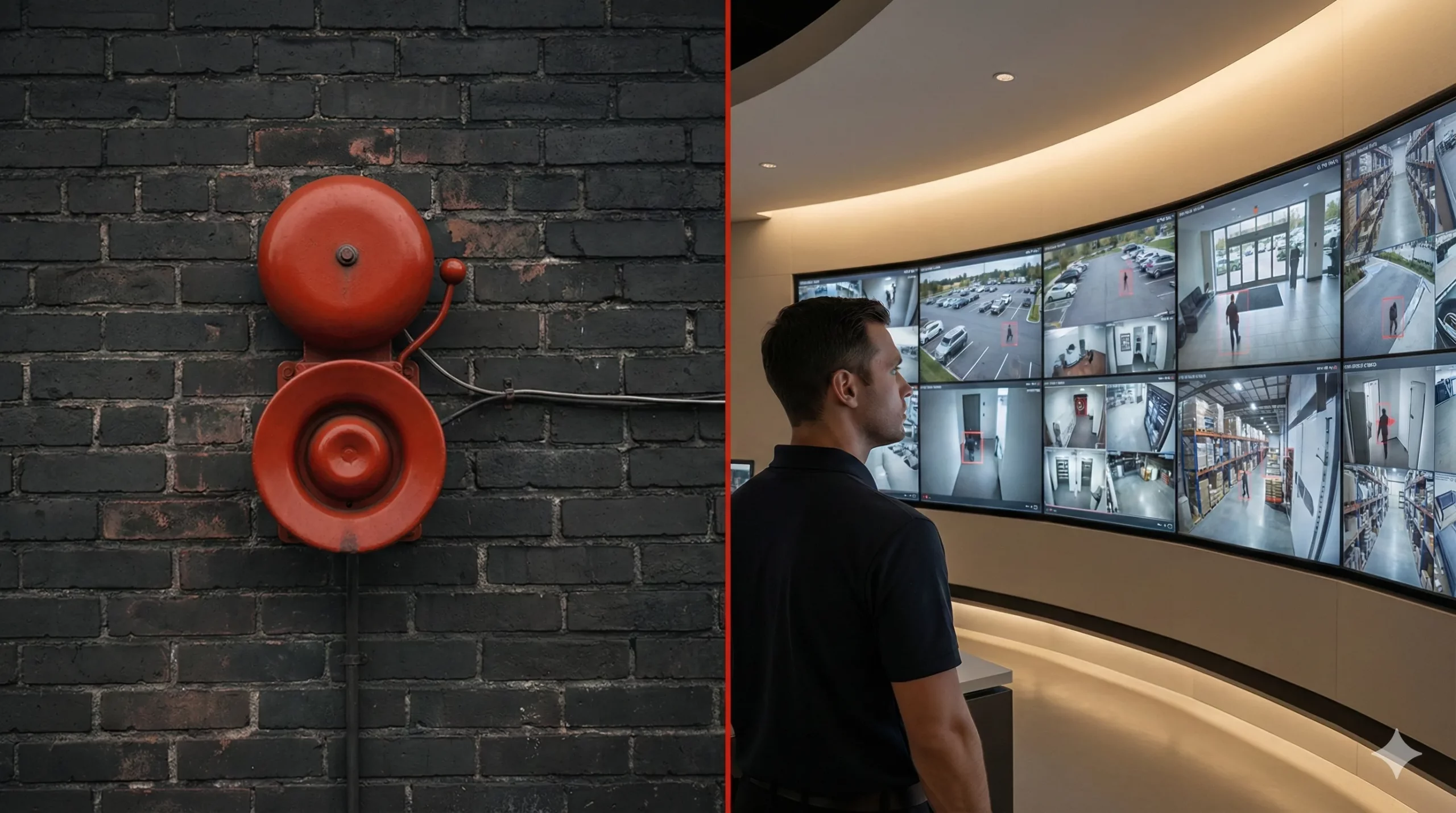
The smartest security operations in 2026 are not choosing between AI and human monitoring. They are letting each do what it is best at. AI handles the tireless, around-the-clock watching across every camera and surfaces what deserves a look. Trained operators handle verification, judgement, and response — the decisions that carry consequences.
This is the approach Modernext is built on. Technology does the first pass so nothing is missed and your operators are never drowning in feeds. A real person then confirms whether something is genuine, decides how serious it is, and responds within seconds when it matters. You get the reach and stamina of AI with the judgement and accountability of a human who can actually act.
You Do Not Need to Replace Your Cameras to Get This
A common assumption is that modern AI monitoring means ripping out your existing CCTV and buying a new “AI camera” system. For most businesses, that is unnecessary and expensive.
Modernext works with the cameras and the DVR or NVR you already have. There is no new wiring to run through your walls and no need to replace working hardware. A single small device is added near your existing recorder — it needs nothing more than a network connection and power, both of which are almost always already there at the NVR. Your current setup keeps doing its job; it simply gains a monitoring layer on top of it.
A real night, end to end: It is 2:14 AM at a warehouse in an industrial area. A figure slips along the side fence toward a roller shutter, moving slowly, staying close to the wall. The moment is surfaced for attention within seconds rather than sitting unseen in a recording. An operator looks, confirms this is not staff and not a delivery, and that the behaviour is deliberate. A response follows immediately, and the incident is documented in full through the Modernext app so the owner has a clear record the next morning — what happened, when, and what was done. No one was sitting awake watching 32 thumbnails. Nothing was missed.
What This Means for Your Business in 2026
If a vendor is selling you “AI that replaces your guards and monitors everything by itself,” be cautious. The detection has genuinely improved, and that is worth having. But detection without verification and response is not security — it is a smarter alarm that still needs someone to answer it.
The right questions to ask in 2026 are simple. When something is flagged, who confirms whether it is real? When it is real, who decides how serious it is, and how fast can they act? And when it is over, do you get a clear record of what happened? If the only answer is “the AI handles it,” the most important parts of protecting your premises are being left to no one.
Autonomous AI agents are a powerful tool. In 2026, the businesses that get the most out of them are the ones that treat them as exactly that — a tool that makes trained human monitoring sharper, faster, and more complete, not a replacement for it.
Frequently Asked Questions
Can AI fully replace human CCTV monitoring in 2026?
No. AI has become very good at watching every feed continuously and surfacing unusual activity, but it cannot reliably verify whether a flagged event is a genuine threat, judge how serious it is, or respond to it. Those decisions carry real consequences and remain human work. The strongest setups pair AI detection with trained operators.
Do I need to buy new AI cameras to get AI-assisted monitoring?
Usually not. Modernext works with your existing cameras and DVR or NVR. A small device is added near your recorder using the network connection and power already present there. There is no rewiring and no need to replace working equipment.
What is the real benefit of AI in monitoring if a human still verifies everything?
AI does the tireless first pass across every camera so nothing is missed and operators are not lost in dozens of feeds. Human attention then goes only to the moments that matter, which means faster confirmation and faster response. You get the reach of AI and the judgement of a trained person.
How will I know what happened during the night?
Verified incidents are documented and reported through the Modernext app, so you have a clear record of what was detected, when, and how it was handled — rather than discovering an event hours later on a recording.
Want AI-assisted monitoring backed by people who actually respond?
Modernext combines round-the-clock AI detection with trained operators who verify and act — using the cameras you already have. See how it would work for your premises.