

Solar Panel and Copper Cable Theft: Protecting Remote Sites at Night
A solar plant is built to work with nobody around. Panels stretch across acres of open land, cables run between the rows, inverters sit in small rooms at the far end, and the nearest person at night may be a single guard at the gate. That is exactly what makes these sites so attractive to thieves. Copper cable can be cut and carried off in minutes, panels can be unbolted and loaded onto a vehicle, and by the time the morning shift notices a section has stopped generating, the material is already at a scrap dealer. This guide covers why solar plants and other remote sites are targeted at night, what actually gets stolen, and how to protect a site that is too large and too remote for a guard to cover alone.
Why Night Is When Solar Sites Get Hit
There is a simple, uncomfortable reason solar theft happens after dark. Once the sun goes down, the panels stop producing power, so the cables running between them can be cut without the risk that daylight carries. Add the darkness, the empty site, and the distance from any town, and the night shift belongs to whoever is willing to climb the fence.
The layout of a plant helps them too. A ground-mounted site of a few megawatts can cover many acres, with a perimeter fence running for kilometres. Rows of panels block sightlines, and the far corner of the site can be a long walk from the gate. One guard cannot see most of it, and a gang that knows this can work for an hour without being disturbed.
What Gets Stolen
- Copper cable: the cables connecting panel strings, combiner boxes, and inverters. Easy to cut, easy to strip, and sold as scrap within hours.
- Solar panels: unbolted from ground-mounted structures and loaded onto a vehicle.
- Earthing strips and copper fittings from across the site.
- Inverter and combiner box components from equipment rooms and enclosures.
- Batteries at sites with storage or backup systems.
- Fencing and structure material taken to reach the rest.
The real loss is the lost generation:
When a few runs of cable are cut, the copper itself may be worth less than you expect. The bigger cost is that whole strings or blocks of panels stop generating until the cable is replaced and the system is tested. Every day of repair is a day of lost output, on top of the replacement material, the labour, and the time spent on police complaints and insurance claims.
It Is Not Only Solar Plants
The same pattern hits every remote site that has valuable metal and nobody watching at night: water pumping stations, telecom equipment shelters, quarries and mining yards, wind and transmission sites, and captive solar installations on the open land beside factories. Anywhere copper, batteries, or equipment sit unattended in the dark, far from help, faces the same risk.
Why Guards Alone Cannot Cover a Remote Site
Most plants employ guards, and they matter. But the arithmetic is against them. A single guard walking the perimeter of a large site can take the best part of an hour to complete a round, and for most of that time he cannot see the stretch he just left. A guard at the gate cannot see the back fence at all. On remote sites, guards can also be outnumbered or intimidated by a group that arrives with tools and a vehicle. We wrote about the limits of relying on one person in why a guard watching CCTV screens is not enough.
Many plants also have perimeter cameras, often required by the EPC contractor or insurer. But on most sites, nobody watches them at night. The footage shows how the cable was cut, the next morning, after the generation report has already flagged the loss.
What Night-Time Monitoring Changes
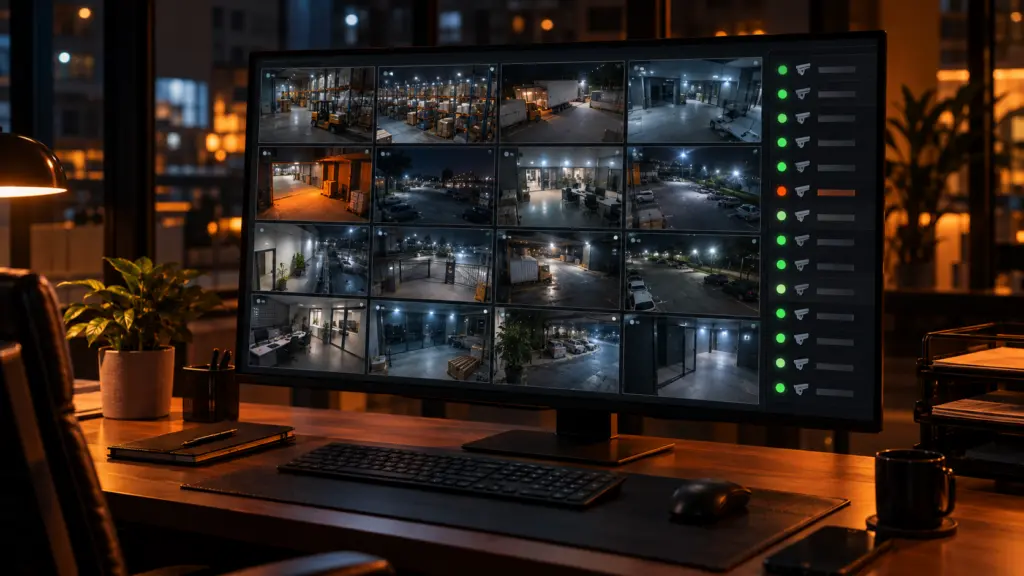
Professional night monitoring puts trained eyes on every camera across the site through the night: the fence line, the cable routes, the inverter rooms, and the gate. At Modernext, technology does the tireless first pass across all your cameras so that nothing is lost in hours of empty footage, and a trained operator looks at whatever seems wrong. A nilgai wandering along the fence does not take up anyone’s time. People crouching between the panel rows at 2 AM do. The operator confirms they are not your staff, and a response goes out immediately, while they are still on site and before the cable is gone. Every verified incident is documented and reported through the Modernext app.
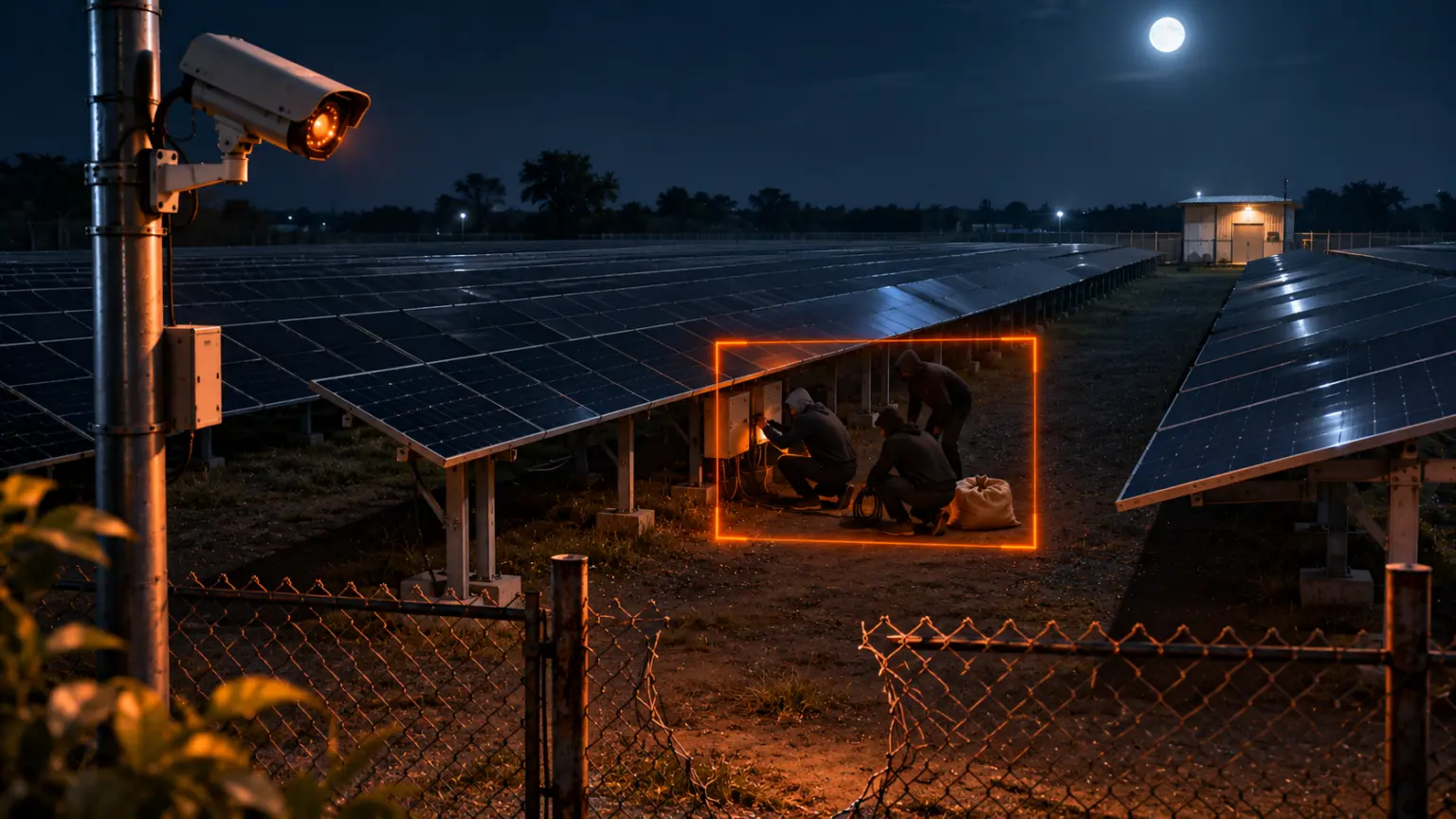
A night at a solar plant, end to end: It is 2:20 AM at a ground-mounted plant on open land, more than an hour from the nearest city. The guard is at the main gate, almost a kilometre from the far boundary. Three men cut through the fence on that far side and start working along a row with cable cutters, a gunny bag ready beside them. On a record-only setup, the morning generation report would show a block offline, and the maintenance team would walk out to find bare conduits. Instead, the movement on the far boundary is caught within seconds. An operator confirms they are not staff, and a response goes out immediately, while the first run is still being cut. By morning the plant manager has a clear record in the Modernext app, and the block is generating as usual.
Works With the Cameras Your Site Already Has
Modernext works with the cameras and the DVR or NVR already installed at your site. A single small device is added near the recorder, using the power and network connection already there. There is no new cabling across the plant. Because monitoring depends on the site’s internet connection, it is worth confirming that your site has a reliable link, and backup power for the recorder, cameras, and router, before you rely on it. Talk to us about the connectivity at your site and we will tell you what is needed.
Running Several Plants?
Developers and O&M companies rarely look after just one site. With plants spread across districts or states, visiting each at night is impossible, and the most remote plant is usually the least protected. A single monitoring layer can cover every site the same way. We cover this in our guide to managing security across multiple locations. For sites still under construction, see construction site security.
A Night Security Checklist for Solar and Remote Sites
- Can your cameras see the whole fence line at night, including the far corners, with enough light or infrared range?
- Are cable routes, combiner boxes, and inverter rooms covered?
- Are cameras mounted high enough to see between panel rows, not just along the front?
- Do the recorder, cameras, and router have backup power that lasts through the night?
- Is the site’s internet link reliable, so the cameras can actually be watched?
- Do you know when a camera stops working? A dead camera on a remote fence can go unnoticed for weeks. Our guide to Video Management Systems explains how a camera health check catches it.
- Are equipment rooms and enclosures locked, and is your cable inventory recorded?
- Is anyone watching the cameras overnight, or only reviewing them after generation drops?
Frequently Asked Questions
Why is copper cable stolen from solar plants?
Copper has a ready scrap market, and the cables connecting panels and inverters are easy to cut and carry away. Solar sites are large, remote, and lightly staffed at night, and the panels produce no power after dark, which is one reason cable theft tends to happen at night.
Can guards alone protect a large solar plant?
Guards are important, but one or two people cannot watch a perimeter that runs for kilometres. While a guard is at one point, the rest of the site is unwatched. Night monitoring adds trained operators watching every camera on the site at once.
Does night monitoring work at remote sites?
Yes, provided the site has a working internet connection and backup power for the recorder, cameras, and router. Modernext works with your existing cameras and recorder; talk to us about the connectivity at your site.
Can one service cover several solar plants?
Yes. Night monitoring can cover every site the same way, with incidents reported per site through the Modernext app, so the most remote plant is not left as the weak point.
Keep your cables in the ground and your plant generating.
Modernext watches your solar plant or remote site through the night, from the fence line to the inverter room, using the cameras you already have. See how it would work for your site.