How to Choose the Right CCTV Monitoring Service in India
You have already worked out that cameras alone are not protecting your business. Now comes the harder part: choosing who actually monitors them. Search for CCTV monitoring services in India and every provider will tell you they offer 24/7 AI-powered surveillance with instant alerts. The websites look the same. The promises sound the same. But the difference between a service that genuinely protects your premises and one that just forwards alerts to your phone is enormous — and you usually only discover which one you bought after something has gone wrong. This guide gives you the questions that actually separate them.
First, Be Clear About What You Are Buying
A lot of confusion in this market comes from three very different things being sold under similar language.
- Cameras and recording — hardware that captures footage. Useful after an incident, useless during one.
- Alerts and self-monitoring — an app that pings your phone when something moves. You are still the one who has to notice, judge, and act, usually while asleep.
- Professional monitoring — trained operators actively watching your feeds, verifying what is real, and responding while the incident is still happening.
Only the third is actually security. Many “monitoring services” are really the second one with better branding. Your first job when evaluating any provider is to work out which of these three they are genuinely selling. Everything below is designed to help you do that.
1. Will They Work With the Cameras You Already Have?
This is the fastest way to separate a monitoring service from a hardware sale. Many providers require you to buy their cameras, their recorder, and their ecosystem — a large upfront cost, a rip-out of equipment that was working fine, and a lock-in that makes it expensive to ever leave.
A genuine monitoring service should be able to work with the cameras and the DVR or NVR you already own. Modernext does exactly this: your existing cameras stay, your recorder stays, and a single small device is added near the NVR using the network connection and power that are almost always already there. No rewiring, no replacing working equipment.
Ask directly: “Can you monitor my current cameras and recorder, or do I have to buy new hardware?” If the answer involves a full system replacement, you are being sold equipment, not monitoring.
2. Is a Human Actually Watching — or Just an Algorithm Texting You?
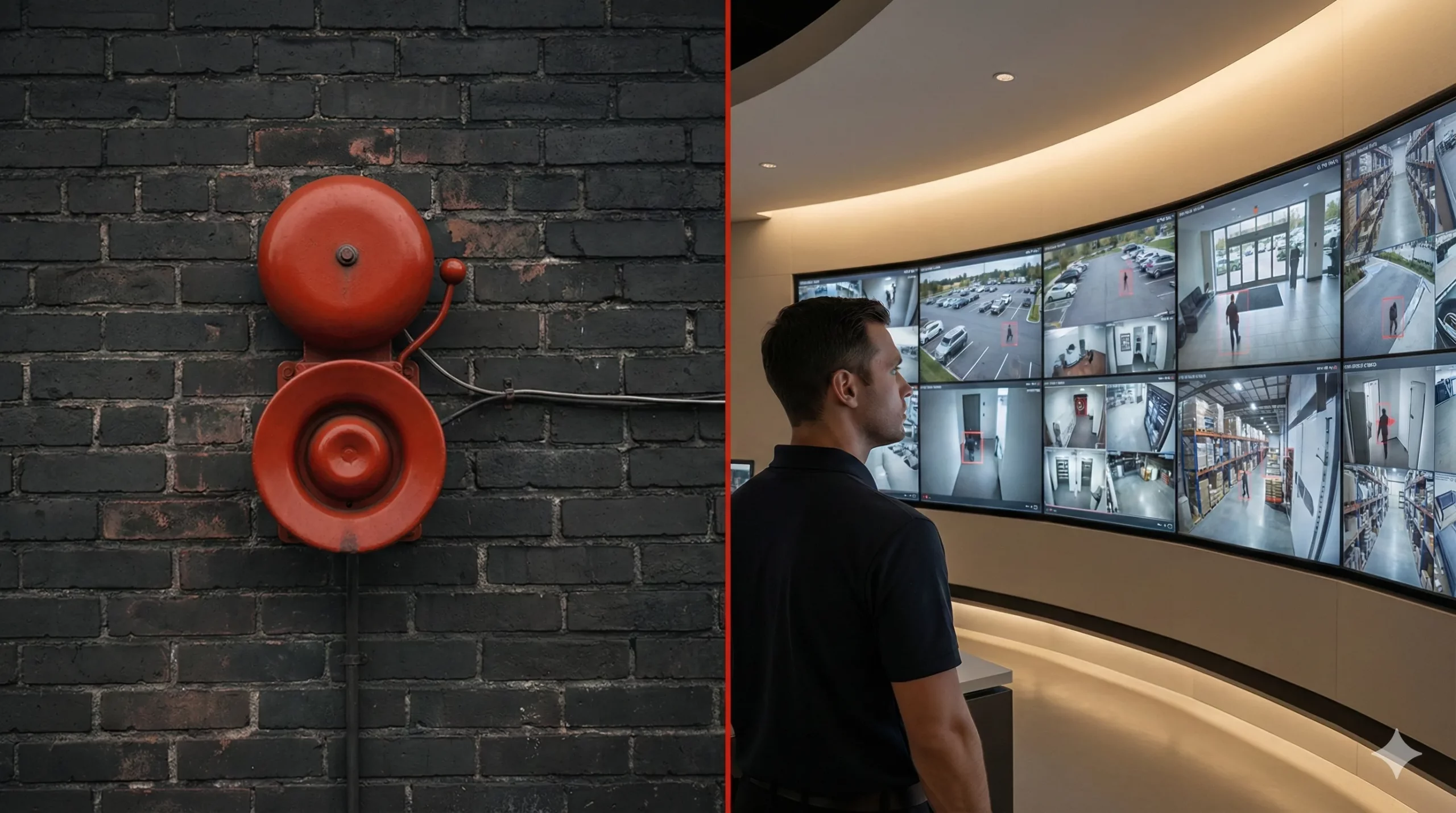
Almost every provider now says “AI-powered.” That word alone tells you nothing. AI is genuinely good at the tireless first pass — watching every feed at once and surfacing what looks unusual. What it cannot reliably do is tell whether a person at your gate at midnight is a thief, a delivery driver, or your own staff member, or decide what should be done about it.
If a service’s answer to “what happens when something is detected?” is “you get an alert on the app,” then you have bought a smarter alarm, not protection. Nobody at that company is accountable for what happens next. You are — at 2 AM, half asleep. We wrote about this gap in more detail in AI CCTV vs human monitoring.
Ask: “When your system flags something, who looks at it, and what do they do?” You want a named human step in that answer.
3. What Actually Happens When a Threat Is Verified?
Detection is the easy part. Response is where services quietly differ. Some will call you. Some will log it and email a report in the morning. Some will do nothing at all beyond the alert.
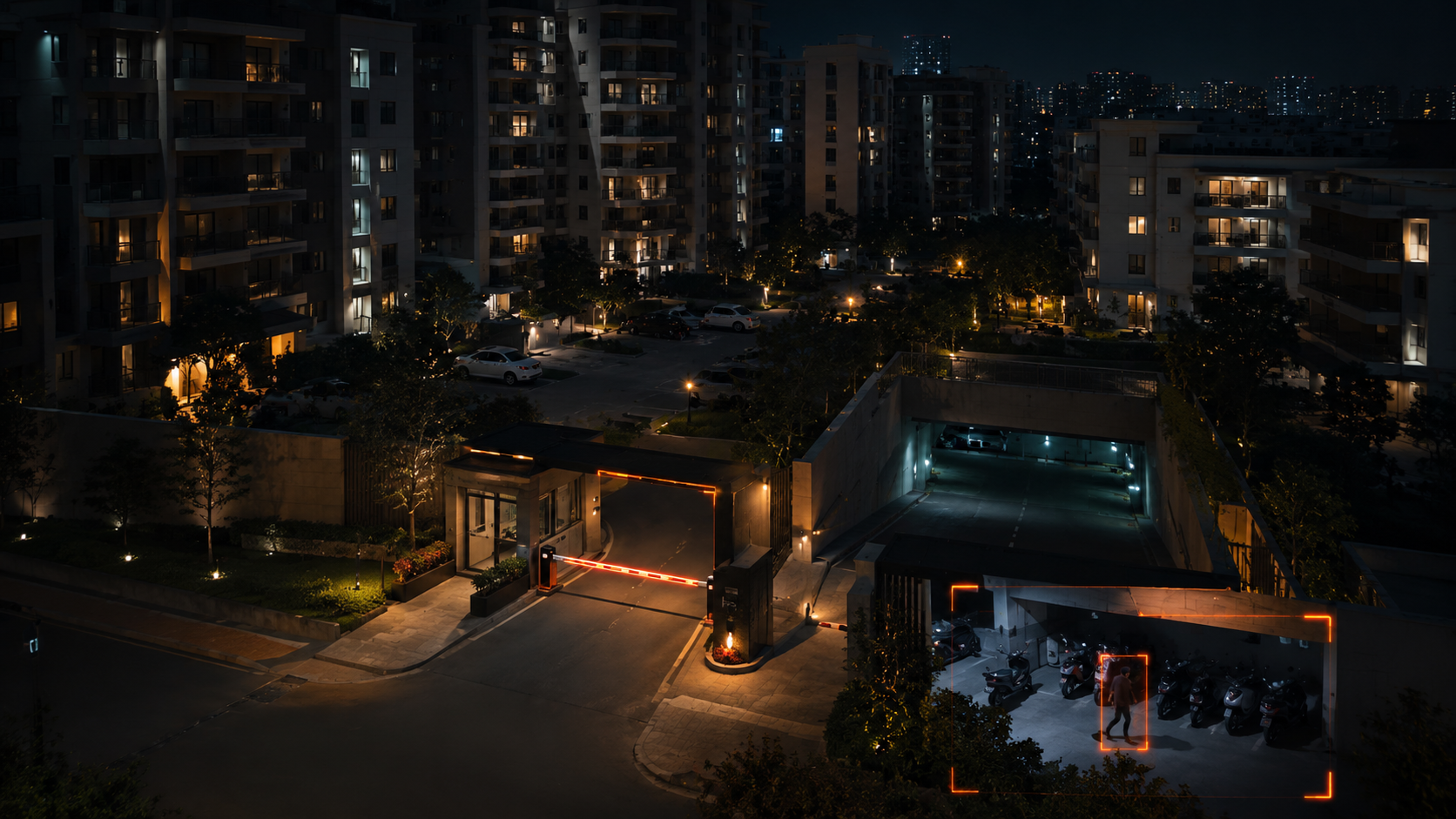
What you want to understand is the escalation protocol: once an operator confirms a genuine threat, what happens, in what order, and how quickly? A person moving between your parked vehicles at 2 AM needs an immediate intervention, not an entry in a report you read at 9 AM. Ask the provider to walk you through, step by step, a real incident from detection to resolution. Vague answers here are the biggest red flag in this entire process.
4. When Are They Actually Watching?
“24/7” appears on every website, but the coverage you need may be narrower and cheaper — or the coverage on offer may be thinner than advertised. Most business incidents happen when the premises is empty: nights, weekends, holidays, and the long stretch between the last person leaving and the first person arriving.
Be precise. Ask whether monitoring is genuinely staffed through the night, or whether after-hours simply means alerts get queued. If your risk is concentrated after closing, an after-hours plan may serve you better than paying for round-the-clock cover you do not need. A good provider will tell you this honestly rather than upselling you.
5. What Record Do You Get Afterwards?
Security you cannot see is hard to trust, and hard to justify to a partner, a landlord, an insurer, or a society committee. You should get a clear account of what was detected, when, and what was done about it — not a vague assurance that someone was watching.
With Modernext, verified incidents are documented and reported through the Modernext app, so you have a straight record each morning rather than finding out from a missing item. Ask any provider: “How do I know what happened last night?” If there is no clean answer, there is no accountability.
6. How Does the Pricing Actually Work?
Monitoring is usually priced on the number of cameras and the hours of coverage. What you want to watch for is what sits around that price: a large mandatory hardware purchase, installation and rewiring charges, long lock-in contracts, or per-incident fees that punish you exactly when the service is doing its job.
The honest comparison is not “monitoring versus nothing.” It is monitoring versus what you already spend — often on guards who can only be in one place at a time. We break the numbers down in the CCTV monitoring cost guide for India, and the guard comparison in CCTV monitoring vs security guard.
The one question that cuts through everything:
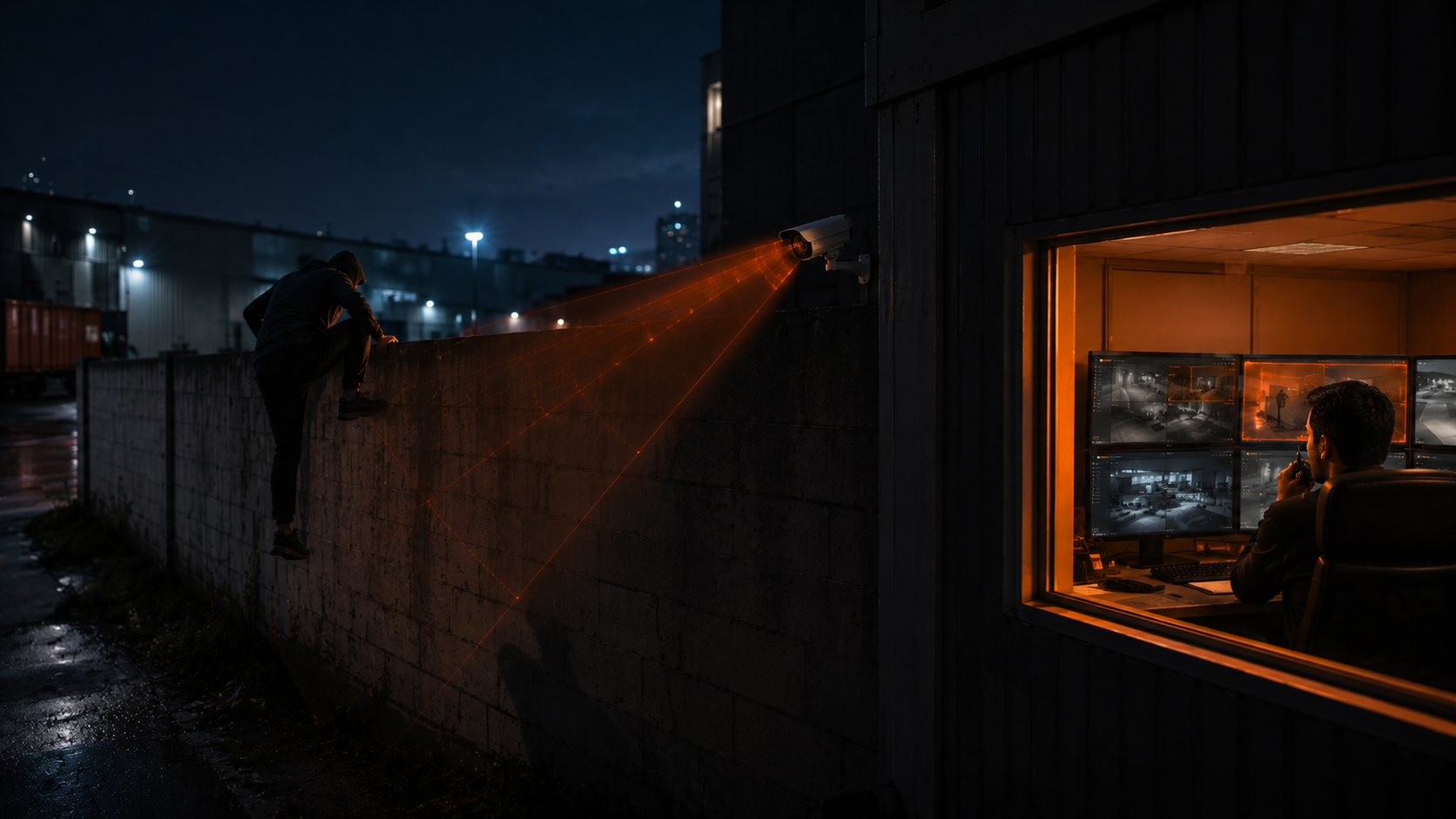
“If someone climbs my back wall at 2:30 tonight, tell me exactly what happens — who sees it, who decides it is real, what they do about it, and how I find out in the morning.” A provider running genuine monitoring will answer that in specifics, without hesitation. A provider selling you cameras and an app will change the subject to features.
Red Flags to Walk Away From
- You must replace all your cameras before they will monitor anything.
- “AI does everything” — with no human verification or response step anywhere in the answer.
- Response means an app notification sent to you, and nothing more.
- No clear incident record — you are asked to simply trust that monitoring happened.
- Pressure to sign a long lock-in before you have seen how the service actually works on your site.
- Vague answers about the night shift — the exact hours you are buying the service for.
A Short Checklist for the Call
Take these six questions into any conversation with a CCTV monitoring provider in India:
- Can you work with my existing cameras and recorder, or must I buy new hardware?
- When something is detected, who verifies it — a person or an algorithm?
- Walk me through one real incident, from detection to resolution.
- Is the night shift genuinely staffed, or are alerts just queued?
- How will I know each morning what happened overnight?
- What is the total cost — including any hardware, installation, and contract terms?
If a provider answers all six clearly and specifically, you are talking to a real monitoring service. If they deflect on more than one, keep looking. The point of paying for monitoring is that someone else is awake and accountable at the hour you are not — and that is the only thing worth buying.
Frequently Asked Questions
Do I need to buy new cameras to use a CCTV monitoring service in India?
Not with a genuine monitoring provider. Modernext works with your existing cameras and DVR or NVR — a small device is added near your recorder using the power and network already there, with no rewiring and no replacement of working equipment. If a provider insists on a full hardware replacement, they are primarily selling you equipment.
What is the difference between CCTV monitoring and just getting alerts on my phone?
A phone alert still leaves you to notice it, judge whether it is real, and decide what to do — usually in the middle of the night. Professional monitoring means trained operators verify the event and respond while it is happening, so the incident is handled rather than merely recorded.
How much does CCTV monitoring cost in India?
It depends on the number of cameras and the hours of coverage you need. The useful comparison is against what you already spend on security — often guards who can only cover one point at a time. Our CCTV monitoring cost guide breaks down the numbers.
Do I need 24/7 monitoring, or is after-hours enough?
It depends on when your premises is exposed. Most incidents happen when a site is empty — nights, weekends, and holidays. If that is your risk window, an after-hours plan may cover you well without paying for hours you do not need. A good provider will advise you honestly rather than upsell.
Ask us the 2:30 AM question.
Modernext monitors the cameras you already own — with trained operators who verify, respond, and report. Tell us about your premises and we will walk you through exactly what happens when something is detected.