Sustainability in CCTV: Eco-Friendly Video Surveillance Solutions for 2026
Sustainability is the new conversation in video surveillance. Industry reports talk about eco-friendly cameras, green data centres, low-power chips, and AI workloads that need less compute. It all sounds like a 2026 trend that lives somewhere far away from the average Indian business. But the most sustainable CCTV decision a business will make this year has nothing to do with buying anything new — it has to do with not throwing away what is already working. The cleanest, greenest security system is one that actually does its job without forcing a hardware replacement every few years. This blog explains what sustainable surveillance really means for Indian businesses in 2026, and where the genuine impact actually lies.
The Hidden Environmental Cost of Modern CCTV
A CCTV system feels invisible from an environmental standpoint. The cameras sit quietly on the wall. The DVR hums in a corner. The power bill goes up by a tiny amount. None of it looks like a problem worth tracking. But across millions of installations, the footprint adds up — and it adds up faster than most owners realise.
There are four genuine environmental costs in a typical commercial CCTV setup:
- Always-on power draw — cameras, NVRs, switches, and storage drives run 24 hours a day, every day, for the life of the system
- Storage and compute — high-resolution footage, especially AI-processed footage, demands continuous storage cycles and processing energy
- Hardware churn — cameras and recorders are typically replaced every few years, often before they have actually failed, generating significant electronic waste
- Wasted manufacturing — the carbon cost of producing new cameras is front-loaded; a camera that runs for 8 years has a far smaller per-year footprint than one swapped out at year 3
Of these, the most underestimated is hardware churn. A working camera being removed from a wall to make space for a newer model is not just a sales transaction. It is a unit of e-waste being created and a fresh manufacturing footprint being committed. Multiply that across an entire country’s commercial buildings and the scale becomes significant.
India’s CCTV Replacement Cycle Is the Real Problem
India is one of the fastest-growing CCTV markets in the world, and most of that growth is not first-time installation any more. It is replacement. A business installed cameras in 2018, the contractor convinces them in 2024 that they need to upgrade to a “newer system,” and a perfectly working set of cameras gets pulled off the walls.
In many of those cases, the old cameras were not the actual problem. The problem was that nobody was watching the feeds. The owner felt the system “did not work” — meaning incidents kept happening — and assumed the answer was new hardware. So new cameras went in, the same gap remained, and a few years later the cycle repeats. The environment loses both ends of that cycle.
The replacement myth:
A CCTV system that is not stopping incidents is rarely a hardware problem. It is almost always a process problem — nobody is watching the feeds, nobody is responding in time, the right cameras are pointed at the wrong places. Replacing the cameras solves none of that. It just creates new e-waste and resets the clock on the same gap.
What Sustainable Surveillance Actually Means
When the industry talks about “eco-friendly CCTV,” there is a lot of marketing noise — green-coloured cameras, low-power chipsets, recycled plastic housings. Some of that matters at the margins. But the real sustainability decisions for an Indian business sit in a much simpler list:
- Right-size the installation — fewer, well-placed cameras producing usable footage beat a bloated camera count producing junk
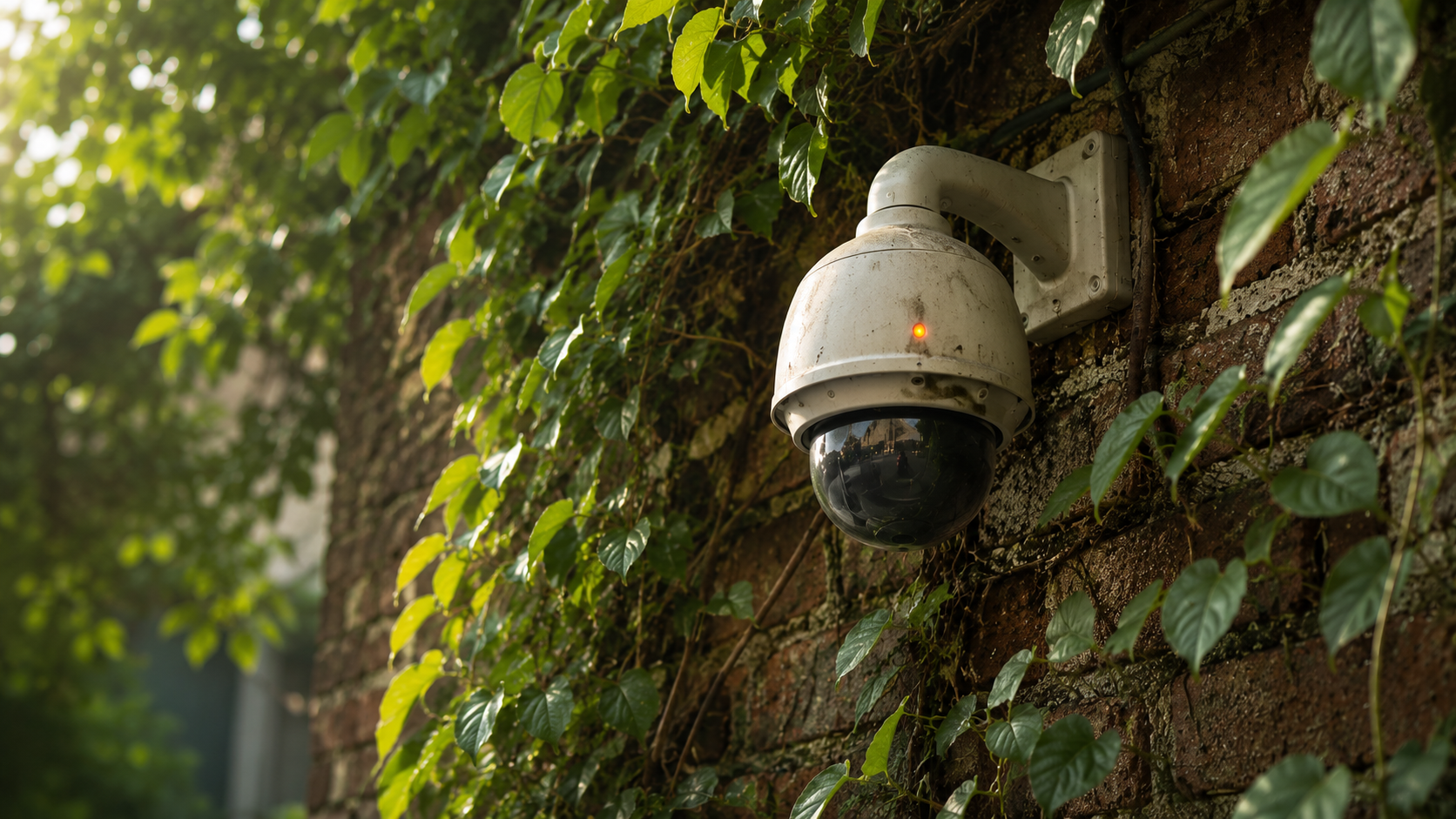
- Use what is already installed — extending the life of existing cameras is a bigger climate win than buying a new “green” model
- Optimise the system, not the hardware — better placement, better lighting, better lenses, and live monitoring usually fix the perceived “system failure” without replacement
- Adjust storage retention — keeping every camera at maximum bitrate for 90 days is rarely necessary and burns continuous storage cycles
- Plan e-waste disposal — when a camera genuinely needs to retire, dispose of it through an authorised e-waste channel, not the local scrap dealer
Notice what is not on this list: switching to a different camera brand. The brand of the camera is far less important than how the existing system is being used.
The Sustainability Paradox: More Cameras Does Not Mean Better Security
There is a tendency in Indian businesses to add cameras whenever a security concern comes up. A theft at the back of the premises? Three new cameras at the back. A complaint about an unsafe parking zone? Two more cameras in the parking. Over years, this approach grows a camera count from 12 to 28 to 40 — and each addition pulls more power, generates more storage demand, and adds to the eventual e-waste pile.
The problem is that adding cameras almost never solves the underlying issue. If nobody was watching the original 12 cameras, nobody will watch the new ones either. The system now consumes more energy and creates more environmental load while delivering the same security outcome it did before. This is the paradox at the heart of unsustainable CCTV growth.
A more efficient model starts from the opposite direction. Before adding any new camera, ask whether the existing cameras are being watched, are pointed at the right places, and are producing usable footage. In most cases, the answer is no — and fixing that gives you a measurable security improvement with zero additional hardware. Our blog on why video quality matters more than camera count covers this principle in detail.
Centralised Monitoring Is Quietly the Greener Model
There is a structural sustainability point that gets missed in conversations about green CCTV: how the watching itself is organised matters as much as the hardware.
Imagine every business in a city running its own dedicated guard room, with multiple large monitors, fluorescent lighting, an air-conditioned space, and a guard sitting in it through the night. Each guard room has to be powered, cooled, and staffed independently. Multiply this by every commercial building, factory, and warehouse — the cumulative load is enormous, and most of it is delivering very limited security value, because a single guard cannot effectively watch dozens of feeds for hours on end.
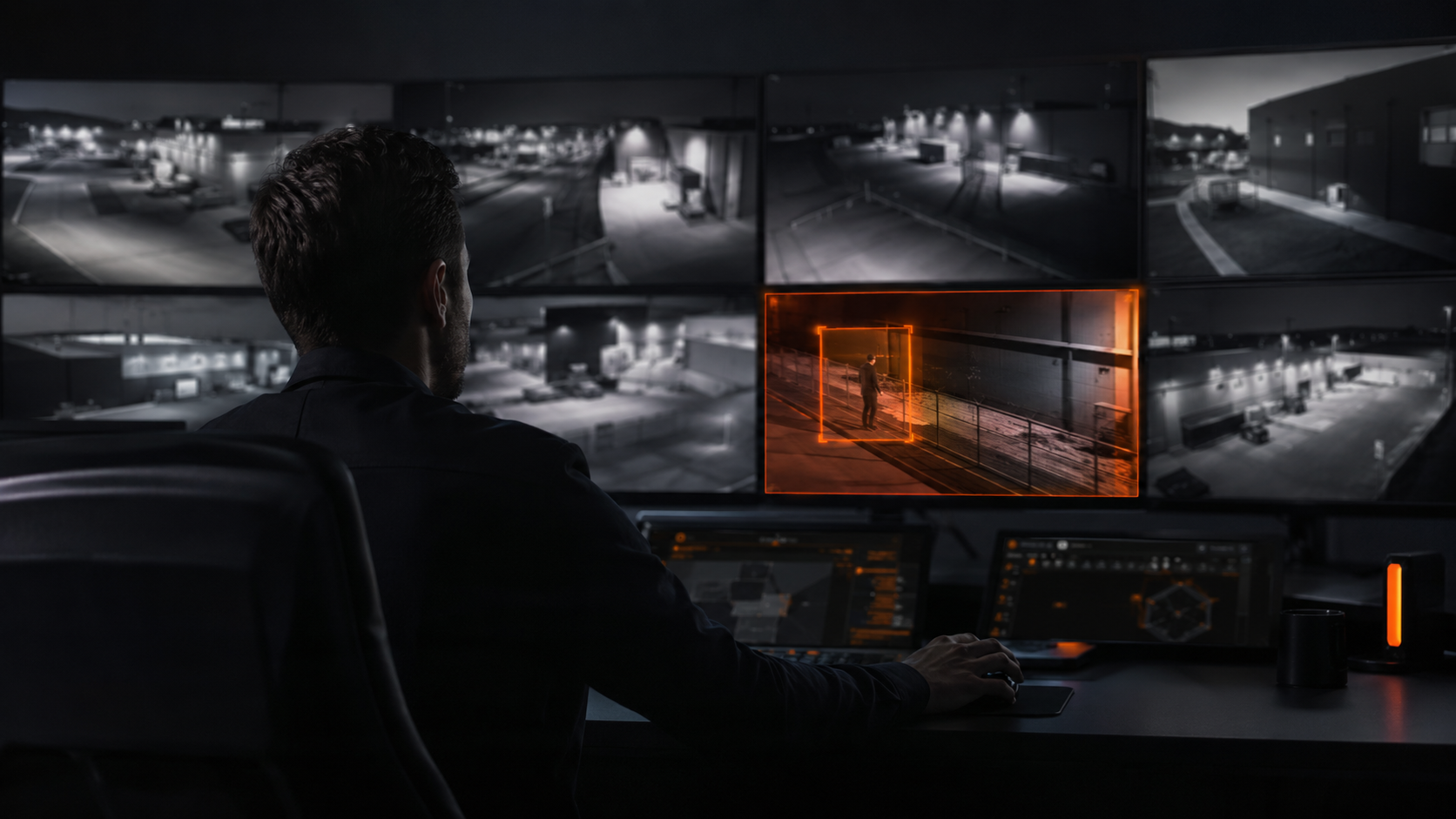
A centralised remote monitoring model consolidates that work. Trained operators watch feeds from many sites in a single, efficient facility. The lights and air conditioning at the client’s premises do not need to be running for someone to keep an eye on things. The per-site environmental cost of being monitored drops sharply. The actual security outcome improves at the same time, because operators in a dedicated centre can do focused surveillance in a way that an on-site guard simply cannot.
The shared-infrastructure advantage:
A single monitoring centre operating efficiently for hundreds of sites consumes a fraction of the energy that hundreds of individual on-site guard rooms would consume. The model is structurally more sustainable, even before any decision is made about specific hardware. It is also why an existing camera setup, when connected to remote monitoring, often becomes the most cost-effective and lowest-impact security upgrade an Indian business can make.
A Practical Sustainability Checklist for Your CCTV System
If you want to make your existing CCTV setup measurably more sustainable, here is a checklist that costs little but compounds quickly:
1. Audit which cameras are actually producing usable footage. Cameras that have failed, drifted out of focus, or face the sun all day should either be repositioned or repaired — not replaced wholesale.
2. Review storage retention. Most businesses retain 30 to 90 days of footage at full quality across every camera. Reducing this to a sensible window for low-risk zones cuts storage cycles and power.
3. Add proper lighting at perimeter and entry points. A well-lit area allows lower-power camera modes to do their job without infrared running at maximum constantly.
4. Add live monitoring before adding more cameras. The most common reason businesses add cameras is to plug a security gap. Live monitoring closes that gap without any new hardware.
5. When a camera genuinely needs to retire, route it to an authorised e-waste recycler. Almost every major Indian city has one. A scrap-dealer chain does not handle the heavy metals and electronics responsibly.
6. Keep the system you have well maintained — clean lenses, tight mounts, secure housings. A maintained camera lasts twice as long as a neglected one and removes the urge to replace prematurely.
Every item on this list improves both sustainability and security at the same time. That is the test of a real green-CCTV decision — if it only helps the environment but weakens security, it will not be adopted, and the environment loses anyway.
How Modernext Fits the Sustainable Model
Setting up Modernext monitoring for an existing site does not require replacing your cameras, your DVR, or your wiring. We install one small device near your existing NVR — it needs an ethernet port and a power supply, both usually already present at the location. No new cameras. No new cabling. No rip-and-replace.
From a sustainability standpoint, this matters in two specific ways. First, the existing camera investment is preserved, which avoids the unnecessary e-waste of pulling working hardware off walls. Second, the security gap that often triggers a hardware upgrade — nobody watching the feeds — is closed without buying more equipment. Many businesses that were about to install another batch of cameras find they no longer need to once monitoring is in place.
Step 1: We assess your existing camera setup, identify which feeds are usable, and flag what needs maintenance instead of replacement
Step 2: We install one small Modernext device near your NVR and configure it
Step 3: Your existing camera feeds are securely connected to our monitoring centre
Step 4: Trained operators monitor your site during the hours you choose
Step 5: You get a working security outcome without adding to your hardware footprint
The Greenest CCTV Upgrade Is the One That Uses What You Already Own
Tell us about your current camera setup. We will show you how to make it work without buying new hardware.
Frequently Asked Questions
Does eco-friendly CCTV mean I need to buy new green-certified cameras?
No. The single biggest sustainability lever for most Indian businesses is keeping their existing cameras in service longer and using them more effectively. New “green” cameras still carry the manufacturing footprint of being newly produced. A well-maintained six-year-old camera that is still doing its job is almost always the greener choice than its replacement.
How much power does a typical CCTV system actually use?
A single fixed camera typically draws between 4 and 12 watts. PTZ cameras and high-resolution units draw more. A DVR or NVR adds another 20 to 60 watts. For a small business with 8 cameras and an NVR, the all-day power consumption is modest individually but continuous, and it adds up significantly over a year. Reducing unnecessary cameras and right-sizing storage retention are the most direct ways to cut that draw.
Is storage retention really an environmental issue?
Yes, modestly but consistently. Retaining 90 days of high-bitrate footage from every camera demands more storage capacity and more disk activity than a more sensible policy. For most businesses, 15 to 30 days at high quality for critical zones and lower retention for low-risk zones is sufficient — and significantly less wasteful.
How do I dispose of old CCTV equipment responsibly?
CCTV cameras, DVRs, and power supplies contain electronic components, metals, and sometimes batteries that need proper e-waste handling. Most major Indian cities have authorised e-waste recyclers that accept commercial security hardware. Avoid handing the equipment to general scrap dealers, who often do not handle these materials safely. Many local municipalities maintain lists of approved e-waste collection centres.
Will Modernext tell me to replace my cameras?
Almost never. Our model is to work with the cameras you already have. In our experience, around 80 percent of perceived camera problems are actually placement, lighting, or maintenance issues that can be fixed without buying anything new. When a camera does need replacing — usually because it has genuinely failed — we recommend repair where possible and responsible disposal where not.
Is centralised monitoring really more sustainable than an on-site guard room?
Structurally, yes. A single efficient monitoring centre serving many sites consumes far less energy in aggregate than each of those sites running its own dedicated guard room with monitors, lighting, and air conditioning through the night. The security outcome also tends to be stronger, because the work is being done in a focused environment by operators trained for it. The combination of better outcome and lower per-site energy load is what makes shared monitoring infrastructure quietly the more sustainable model.
Related Articles
→ Trusted Data Environment: Why Video Quality Matters More Than Camera Count
→ CCTV Monitoring Cost in India 2026: Complete Pricing Guide
→ Your Security Guard Is Sitting in Front of CCTV Screens. Here’s Why That’s Not Enough.
→ CCTV Monitoring vs Alarm Systems: Which Protects Your Property Better?
→ After-Hours Retail Security: Protecting Your Store When It’s Closed
Free Assessment: Make Your Existing CCTV Work Harder
Send us your camera count and current setup. We will tell you what you can get from what you already own — before any new hardware enters the conversation.